Category: Ancient Rome
-

The Laurel Wreath
To the Romans, like the ancient Greeks before them, the laurel was sacred. The Greeks believed the laurel groves were the sacred dwelling places of the gods and nymphs. The Romans adopted the laurel wreath, and it became a symbol of military victory, worn by generals leading their troops in a triumph, on their arrival back…
-

Augustus: Shrewd operator
The Meroe head of Augustus – British Museum, London Augustus had a ruthless reputation. What he could not eliminate with the strength of arms, he did so by manipulation – Alvin Ang Augustus transformed Rome from a bitterly-divided, war weary republic into an empire in a series of superb strokes of political manipulation. Emerging victorious…
-
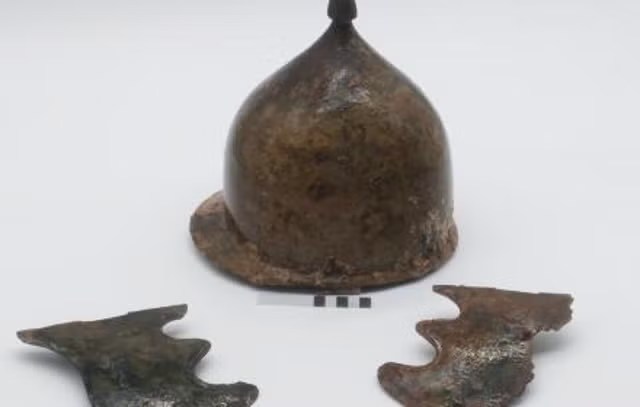
‘Extraordinary’ Roman helmet from ancient sea battle found in Mediterranean
Helmet was likely lost during battle of Aegades of 241 BC, researchers say Published on Tuesday 09 September 2025 in The Independent Written by Vishwam Sankaran Marine archaeologists have uncovered a rare Roman-era helmet from the bottom of the Mediterranean Sea that was lost during an ancient naval battle in 241 BC. The military helmet, in an “extraordinary state of…
-

Ovid: The Art of Love (Ars Amatoria) Book I Part XVI: Promise and Deceive
lustration by Frederico Righi Publius Ovidius Naso 43 BC – c. 17 AD Don’t be shy of promising: promises entice girls: add any gods you like as witness to what you swear. Jupiter on high laughs at lovers’ perjuries, and orders Aeolus’s winds to carry them into the void. Jupiter used to swear by the…
-

Sarn Helen: The Remarkable Roman Road in Wales
It is one of the most well-preserved Roman roads in the UK, where it runs the entire length of a country from coast to coast, much of it still visible and even walkable. By Steffan Rhys : June 8th 2025 One of Britain’s best-kept secrets lies beneath our feet, a living piece of history that even…
-
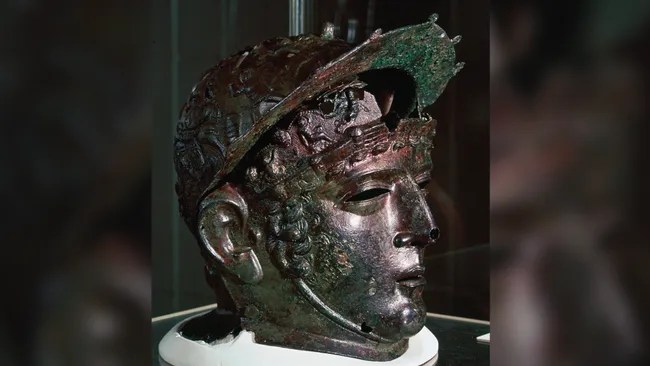
Ribchester Helmet: A rare ‘face mask’ helmet worn by a Roman cavalry officer 1,900 years ago
By Kristina Killgrove published 2nd February 2026 in Live Science The helmet has been a powerful symbol of Roman Britain since it was discovered over 200 years ago. In 1796, while scampering through fields behind his house in Ribchester, England, a young boy stumbled upon a hoard of over 30 metal artifacts in a hollow. The most unique…
-
Ovid: The Art of Love (Ars Amatoria) Book I Part XIV: Look Presentable
llustration by Frederico Righi Publius Ovidius Naso 43 BC – c. 17 AD Don’t delight in curling your hair with tongs, don’t smooth your legs with sharp pumice stone. Leave that to those who celebrate Cybele the Mother, howling wildly in the Phrygian manner. Male beauty’s better for neglect: Theseus carried off Ariadne, without a…
-

Parasitical infection of soldiers at Hadrian’s Wall
Whipworm egg from the analysis of sediment from the sewer drain leading from the latrine block at the 3rd century CE bath complex at Vindolanda. Credit: Marissa Ledger by The University of Cambridge – edited by Sadie Harley, reviewed by Robert Egan – December 2025 I came across this article in Phys.org and thought it was very interesting…
-
Ovid: The Art of Love (Ars Amatoria) Book I Part XIII: Be Where She Is
llustration by Frederico Righi Publius Ovidius Naso 43 BC – c. 17 AD Meanwhile, if she’s being carried, reclining on her bed, secretly approach your lady’s litter, and to avoid offering your words to odious ears, hide what you can with skill and ambiguous gestures. If she’s wandering at leisure in the spacious Colonnade, you…
-

Hadrian’s Wall: A Marvel of Roman Engineering
”And so, having reformed the army quite in the manner of a monarch, he set out for Britannia, and there he corrected many abuses and was the first to construct a wall, eighty miles in length, which was to separate the barbarians from the Romans” – Historia Augusta The wall commonly known as ‘Hadrians’ is…

