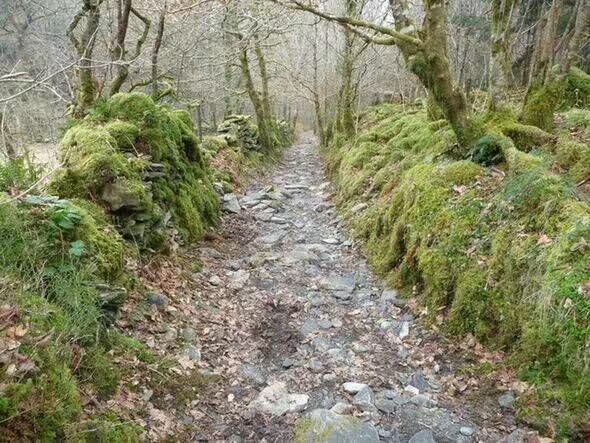
It is one of the most well-preserved Roman roads in the UK, where it runs the entire length of a country from coast to coast, much of it still visible and even walkable. By Steffan Rhys : June 8th 2025
One of Britain’s best-kept secrets lies beneath our feet, a living piece of history that even locals are unaware of. This ancient Roman road, known as Sarn Helen, stretches from Neath on the south coast of Wales to Conwy on the north coast and is a unique, semi-hidden wonder.
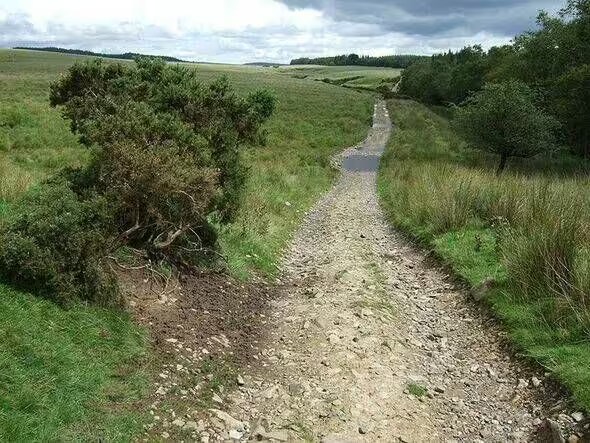
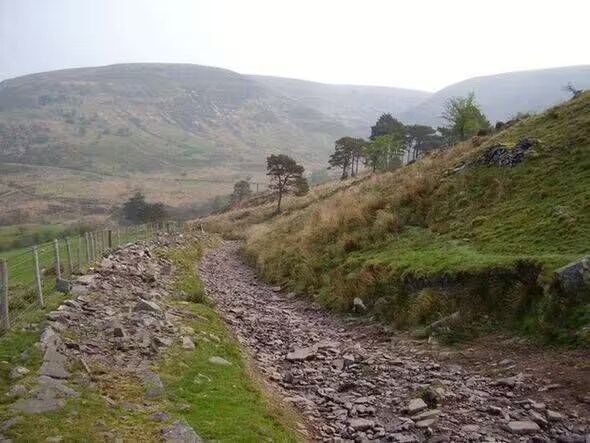
Sarn Helen, one of the most well-preserved Roman roads in Britain, reveals its cobbled stone in many places, still exposed to the elements in some of the wildest parts of Wales.
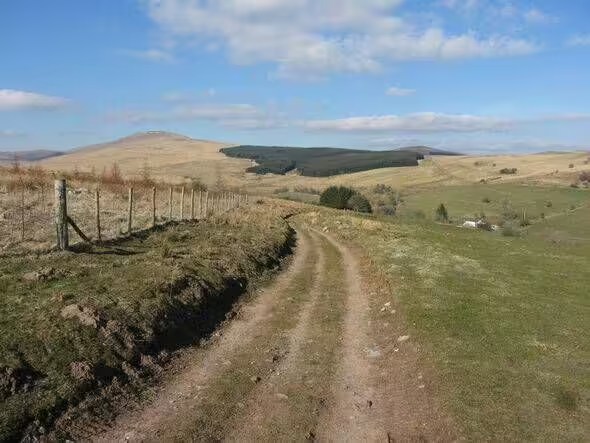
A favourite among walkers, some of whom suggest you can almost hear the echoes of Roman boots that once marched along it, Sarn Helen was constructed nearly 2,000 years ago.
It’s believed to be named after Celtic princess Elen Lwy-ddawg – or Saint Elen, an early founder of churches in Wales – who was wedded to Magnus Maximus, the formidable Roman emperor who landed in Britain around 368AD.
As the daughter of the Romano-British ruler Octavius, it’s thought she convinced her husband to construct roads across the nation for his soldiers to defend it more effectively against invaders. Large standing stones, some towering at 13ft high and significantly predating the Roman occupation of Britain, are scattered along specific sections of the road.
One stone, known as Maen Madoc, still carries an ancient Latin inscription that reads, ‘Dervacus, son of Justus. Here he lies’.
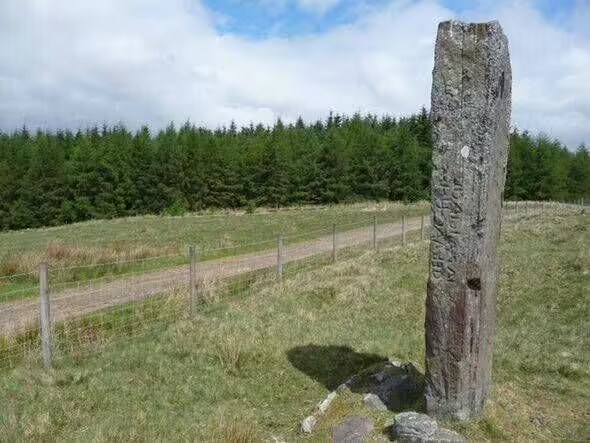
Nestled within the Bannau Brycheiniog (Brecon Beacons) National Park, it perfectly aligns with the area’s largest standing stone, Maen Llia, positioned at the head of the Llia Valley. Indeed, if not for the intervening forestry, one could easily spot one stone from the other despite a distance of two miles.
Maen Llia is thought to have been erected during the Bronze Age, and considering that a quarter of the stone is buried deep in the ground, the effort to position this massive stone would have been monumental. The purpose of these stones continues to be a topic of debate among scholars, with theories ranging from primitive route markers to Stone Age territorial signs to gravestones marking burial caverns of those who died by the roadside.
In his evocative book, titled Sarn Helen, author Tom Bullough paints a vivid image of the ancient track: “A grass-stripped track framed by broken walls, it follows the ridge through puddles and swamps, over occasional passages of stone once laid down by Roman legionaries. Some of them still have a distinct surface, with neat kerbs to either side.”
He further details the historical significance of the path: “This track climbing gently among meadow pipits and lately shorn ewes belongs to the early years of the Roman occupation. South Wales did not fall lightly, the Silures resisted for 30 years, even defeating the second legion, but the Romans built their fort in Neath, probably in AD74, so the road must date from around this time. It is straight in stretches, sometimes rutted by bicycles and off-road vehicles.”
The tale reaches its climax as he reveals the final destination 150 miles from Neath at the Conwy estuary, capturing the ancient atmosphere: “Here, 1,900 years ago, the Roman galleys would ride the tides to land or collect their supplies and men. Here it was that Sarn Helen ended and the rest of the world began.”
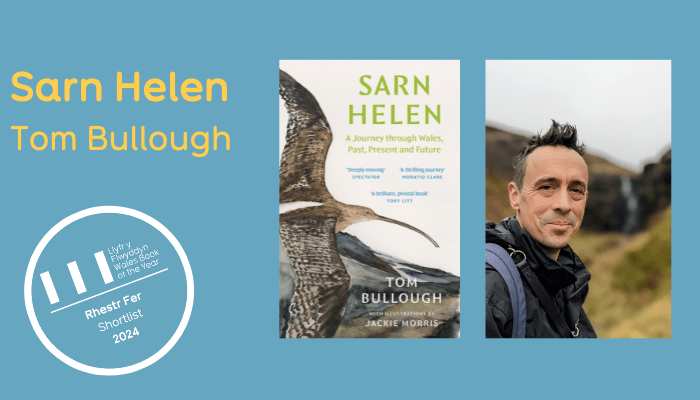
This book is the account of Tom Bullough’s journey along Sarn Helen – Helen’s Causeway – the old Roman Road that runs from the south of Wales to the north. As Bullough walks the route, he explores the political, cultural and mythical history of this small country that has been divided by language and geography. Woven into this journey are conversations with climate scientists and the story of Tom’s engagement with the urgent issue of the climate crisis, showing us its likely impact on Wales, which is – in miniature – a vision of what lies ahead for us all.


Leave a Reply