Tag: Ancient Rome
-

Spartacus: The 3rd Servile War
Slavery in ancient Rome differed from its more modern form only in that it was not based on race, but like any form of slavery it was an abusive and degrading practice, and cruelty was commonplace. As a slave you had no rights whatsoever, and time and again those who suffered under this practice rebelled…
-

Nero’s ‘Golden House’ unveiled
A new entrance and the renovated western side of The Domus Aurea ROME, by Alvise Armellini for Reuters – A section of Ancient Roman Emperor Nero’s vast underground Domus Aurea (the Golden House) was reopened to the public on Friday after extensive restoration and repair work to protect the nearly 2,000-year-old site from water damage.…
-
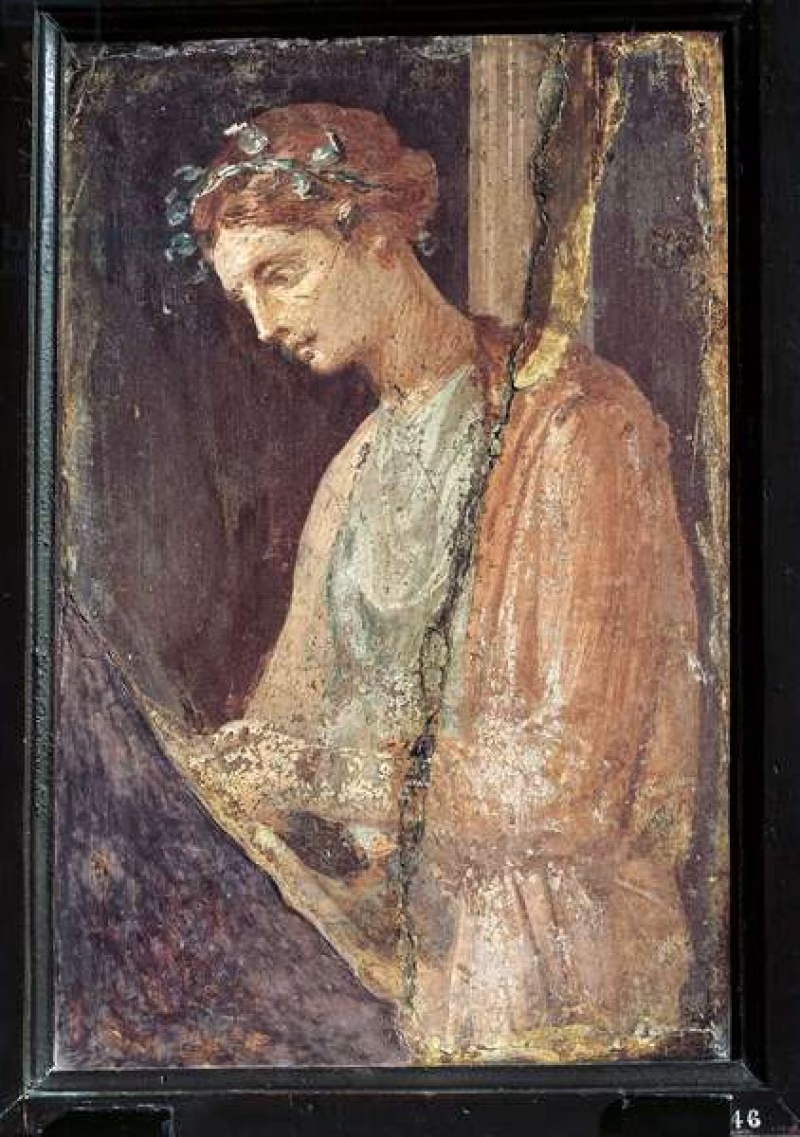
Sulpicia
Many women, we know, wrote poetry in ancient Rome. The works of only one have survived. This poem by Sulpicia, the niece of the distinguished statesman and patron of letters Valerius Messalla Corvinus, allow us to hear an aristocratic female voice from the late first century B.C. and the Augustan milieu of Horace and Virgil.…
-

The luxury lifestyle of elite Pompeii residents
A thermal bath complex is latest discovery among ruins of Italian city destroyed by Vesuvius eruption in AD79 Angela Giuffrida in Rome, 17th January 2025 A large and sophisticated thermal bath complex that was believed to have been used by its owner to pamper well-heeled guests has been discovered among the ruins of ancient Pompeii. The…
-

A Happy Roman New Year
The Romans celebrated the New Year as a time of new beginnings and fresh starts, and New Year celebrations in ancient Rome were full of symbolism and held huge significance. Janus, the god who the month of January is named after, was often depicted with one face looking backward and another face looking forward, representing…
-

The Great Invasion
”Of all the Britons, the inhabitants of Kent, an entirely maritime district, are by far the most civilised, differing but little from the Gallic manner of life. Of the inlanders most do not sow corn, but live on milk and flesh and clothe themselves in skins. All the Britons, indeed, dye themselves with woad, which…
-

Crossing the Rubicon: Caesar’s bold move
The Roman-built stone bridge over the Rubicon marking the spot where Caesar’s troops allegedly crossed in the small hours of 10th January 49 BC © Carole Raddato. The Rubicon is a small river, or stream in northeastern Italy which flowed into the Adriatic Sea, and marked the boundary between the Roman province of Cisalpine Gaul and…
-

Volcanic Ash Concrete: The Marvel of Roman Engineering
Herod the Great’s Roman-built harbour at Caesarea Maritima, present-day Israel We’ve known about it for centuries, but now it seeems we are willing to study the properties and chemical mixture of Roman concrete in a little more depth, because it is particularly well suited to marine structures, and could help us out of what is now a global…
-
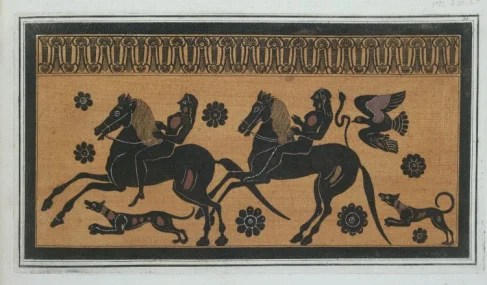
Castor and Pollux: The Legendary Twin Horsemen of Rome
Black-figure amphora depicting the Dioscuri on horseback. Dating to circa 500 BC, held in the British Museum In the southern sky during wintertime, near the constellations of Orion and Taurus there are two bright stars. Known in Greek mythology as the Dioscuri, (Dioscuri from the Greek Dioskouroi, meaning “Sons of Zeus”), they were twin supernatural beings who helped save shipwrecked sailors, usually by appearing…
-

Who was Julius Caesar?
In his The Life of Julius Caesar, par. 45-53 (translated by J.C. Rolfe), the ancient Roman historian Suetonius describes the appearance of Gaius Julius Caesar as follows: “They say he was tall, fair-skinned, well-built, with a full face, black and lively eyes. He was distinguished by excellent health: only towards the end of his life…

