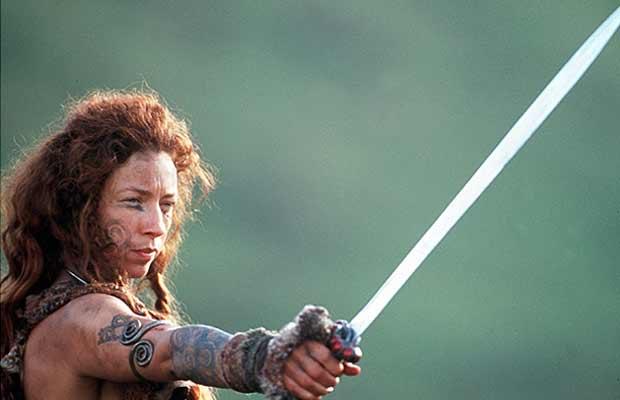
Alex Kingston portraying Boudica in the 2003 film “Warrior Queen”
Kingdom and household were plundered like prizes of war, the one by Roman officers, the other by Roman slaves. As a beginning his (Prasutagus) widow Boudicca was flogged and their daughters raped. The Icenian chiefs wre deprived of their hereditary estates as if the Romans had been given the whole country. The King’s own relatives were treated like slaves – Tacitus, Annals
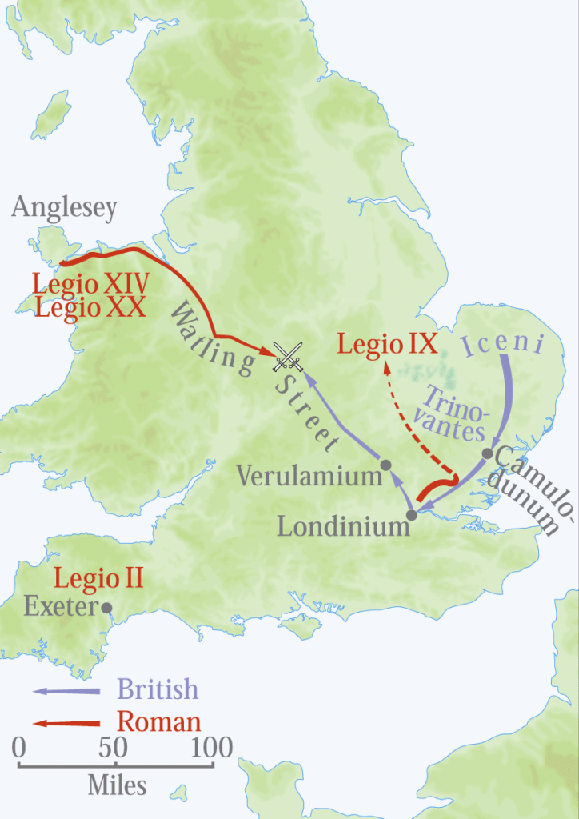
The Emperor Claudius had begun his invasion of Britain in 43 AD, and by 60 AD his Provincial governor, Suetonius Paulinus had the Legio XIV Gemina & Legio XX Valeria Victrix, approximately 11,000 men plus auxiliary troops invade the island of Mona (modern-day Angelsey), in an attempt to smash the resistance to Roman rule that found refuge there (although the profitable copper mines on the island may also have been a factor). After crossing the Menai Strait in flat-bottomed boats, the cavalry swimming alongside, the Romans were initially frightened by the screaming, wild-haired woman who met them on the shoreline. Tacitus says: “On the shore stood the opposing army with its dense array of armed warriors, while between the ranks dashed women, in black attire like the Furies, with hair dishevelled, waving brands. All around, the Druids, lifting up their hands to heaven, and pouring forth dreadful imprecations, scared our soldiers by the unfamiliar sight, so that, as if their limbs were paralysed, they stood motionless, and exposed to wounds”.
He continues: “Then urged by their general’s appeals and mutual encouragements not to quail before a troop of frenzied women, they bore the standards onwards, smote down all resistance, and wrapped the foe in the flames of his own brands. A force was next set over the conquered, and their groves, devoted to inhuman superstitions, were destroyed. They deemed it indeed a duty to cover their altars with the blood of captives and to consult their deities through human entrails.”
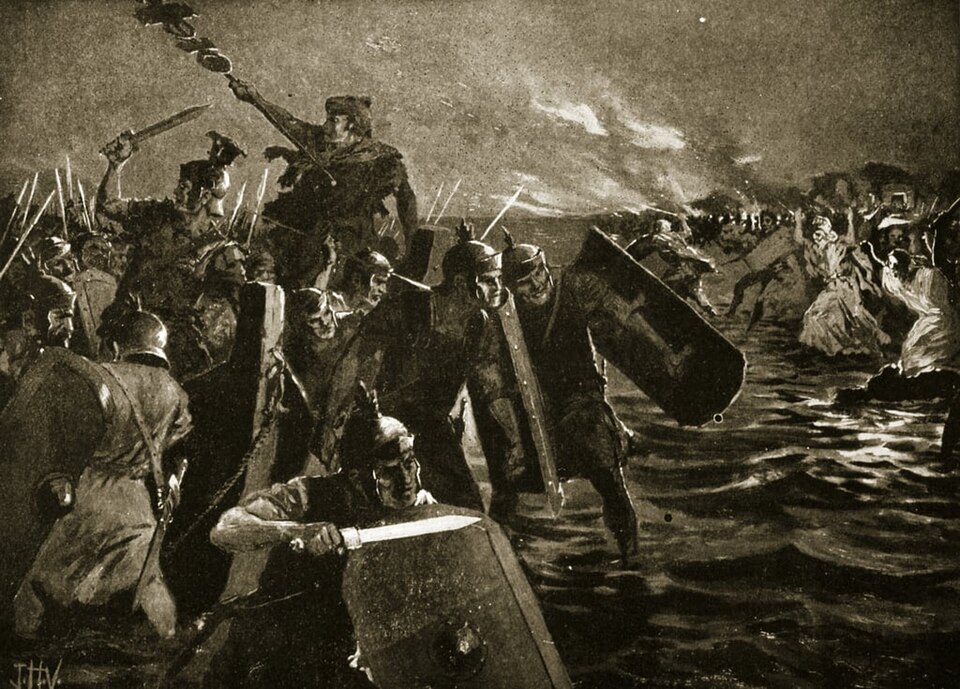
The Romans stayed on Anglesey only long enough to begin to garrison the island, but then were quickly informed of a serious rebellion in southern Britain. Tacitus writes: “Suetonius while thus occupied received tidings of the sudden revolt of the province…however, with wonderful resolution, (he) marched amidst a hostile population to Londinium…” The rebellion was being led by a woman named Boudicca, the widow of the late King Prasutagus, and now queen of the ancient British tribe, the Iceni.
After the Roman invasion, several chieftans offered to make their kingdoms “client-states” of Rome, meaning as long as their leaders did as Rome asked, they would maintain their position within the Roman Empire. The Iceni tribe, under Prasutagus, agreed to this arrangement and they remained an independant ally until his death. On his passing he left his kingdom jointly to his daughters and to the Roman emperor (Nero) in his will, but this was ignored, and the Romans annexed his kingdom stealing his lands and property, flogging his wife when she complained, and raping the daughters. So, while Paulinus’ troops were dealing with the Druids on Anglesey, the Iceni tribe in East Anglia rebelled against their overlords, and were joined by neighbouring tribes like the Trinovantes.
The Greek historian Cassius Dio tells us that:
… Buduica led her army against the Romans; for these chanced to be without a leader, inasmuch as Paulinus, their commander, had gone on an expedition to Mona, an island near Britain. This enabled her to sack and plunder two Roman cities, and, as I have said, to wreak indescribable slaughter. …” (History of Rome LXII.7.)
The Britons main reason for rebelling was, for Cassius Dio at least, money: the Roman procurator Decianus Catus confiscated most of the money Claudius had intended to be given to the British chieftans, and Seneca, the tutor and adviser to Nero, demanded the return of the money he had loaned to British leaders (around 40 million sescertes), including Prasutagus, at high interest rates, as he thought Nero would soon abandon the province, and feared he would lose his money. This, combined with the abuse of Boudicca and the violation of her daughters, triggered the massive, bloody uprising.
Camulodunum (today’s Colchester) had been the main town of the campaign of Claudius. This fortified town was on Trinovante’s territory, a tribe that had been friendly to the Romans from Caesar’s time. Here, Cassius Dio says a theatre, a senate house, a statue to Victory, and a temple to the divine Claudius were all built, and paid for by the taxes demanded of local people. This was one humiliation too many to the Britons, and Boudicca’s army descended on Camulodunum.
The future governor Quintus Petillius Cerialis, commanding the Legio IX Hispana, attempted to reach the city, but was ambushed and was almost wiped out. His infantry were all killed, only he and some of his cavalry escaped.
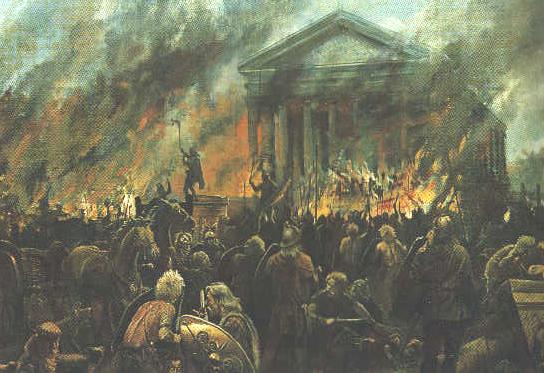
The Roman inhabitants of Camulodunum pleaded for help from Catus Decianus, but he sent just two hundred auxiliary troops, who could do little to help. The rebels attacked the poorly defended city and completely destroyed it, besieging the last inhabitants in the temple of Claudius for two days before it was set alight and destroyed. The city was methodically demolished, and every living thing was killed.
While still in Angelsey, news of the rebellion reached Suetonius and he hurried to Londinium, a relatively new settlement founded shortly after the initial conquest in AD 43, which was growing fast into a thriving commercial centre for merchants and traders. Suetonius considered fighting Boudicca’s army there, but he judged his army too small, and concious of Petillius’s defeat at Camulodunum, decided to sacrifice the city to save the whole province and withdrew his men, leaving the inhabitants who could not march with him, the elderly, the infirm and children to their fate.
The rebels attacked and burnt Londinium, hideously torturing and killing everyone who had not departed with Suetonius. Modern-day archaeology shows a thick red layer of burnt debris covering coins and pottery dating before AD 60, Roman-era skulls found in the river Walbrook in 2013 may have been victims of the rebels, and excavations in 1995 revealed that the destruction extended across the River Thames to the southern end of where London Bridge stands today.
Verulamium (modern-day St Albans) was destroyed soon after, and excavations in the centre of Verulamiumin in 1996 went through layers up to 2 cm thick, of burned material. Tacitus writes that the Britons did not take, barter or sell prisoners, but were interested ‘…only in slaughter by gibbet, fire, or cross.’ Cassius Dio’s account is more detailed ‘… that the noblest women were impaled on spikes and had their breasts cut off and sewn to their mouths…to the accompaniment of sacrifices, banquets, and wanton behaviour in sacred places…’ Other victims were skewered lengthwise on sharp wooden stakes, many being tortured before being decapitated.
The numbers dead cannot be verified but it is thought Boudicca’s army killed an estimated 70,000 to 80,000 Romans and Romanised Britons.
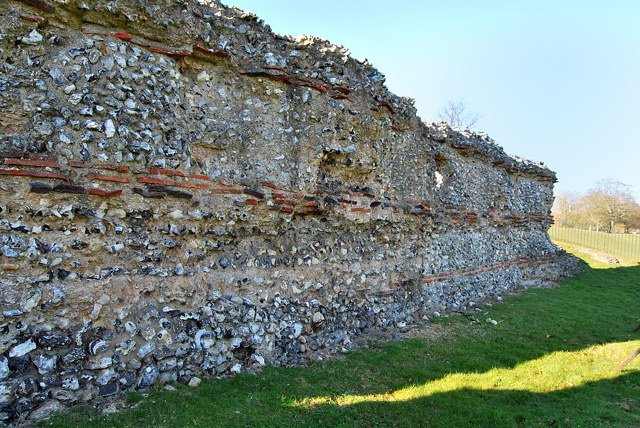
Although not a part of the traditional narrative, the rebellion possibly also destroyed Calleva Atrebatum (Silchester in Hampshire), as excavations of the town show its complete destruction sometime between 60 and 80 AD.
As the Britons destroyed the towns they thought harboured Romans, or those friendly to the Romans, Suetonius was regrouping his army. He sent an order to Poenius Postumus, the prefect of a legion based at Isca (modern-day Exeter) to join him, but Postumus refused to obey as he thought the danger of leaving Isca undefended was too great. Suetonius, undaunted and with a 10,000 strong force, took a stand in a area somewhere along todays Watling Street in the Midlands, an area that had a wood behind him, and opened out on to a wide plain. His force was heavily outnumbered but he was sure of his ability, addressing his men bluntly:
‘Ignore the racket made by these savages. There are more women than men in their ranks. They are not soldiers — they are not even properly equipped. We have beaten them before and when they see our weapons and feel our spirit, they will crack. Stick together. Throw the javelins, then push forward: knock them down with your shields and finish them off with your swords. Forget about plunder. Just win and you will have everything.’ – Tacitus Annals 14.37
Tacitus goes on to describe the battle:
‘At first, the legionaries stood motionless, keeping to the defile as a natural protection: then, when the closer advance of the enemy had enabled them to exhaust their missiles with certitude of aim, they dashed forward in a wedge-like formation. The auxiliaries charged in the same style; and the cavalry, with lances extended, broke a way through any parties of resolute men whom they encountered. The remainder took to flight, although escape was difficult, as the cordon of wagons had blocked the outlets. The troops gave no quarter even to the women: the baggage animals themselves had been speared and added to the pile of bodies. The glory won in the course of the day was remarkable, and equal to that of our older victories: for, by some accounts, little less than eighty thousand Britons fell, at a cost of some four hundred Romans killed and a not much greater number of wounded.’ – Annals 14.36
Back in Isca, Poenius Postumus, who had refused to march and join up with Suetonius for the battle, and had left himself open to rumours of disobediance and cowardice, killed himself.
After the battle, Tacitus said Boudicca poisoned herself, although other sources mention nothing of suicide and Cassius Dio says Boudicca fell ill, died and was given a lavish burial. History does not record her daughters fate. Suetonius conducted widespread punitive operations against the Britons after the rebellion was quashed, but criticism of this led to an investigation instigated by Nero himself, and Suetonius was replaced with the more moderate Publius Petronius Turpilianus. Boudicca’s defeat strenghened Roman rule in southern Britain, but further north Britain remained restless. In 69 AD a Brigantes chieftan called Venutius, led to another less well-known rebellion, at first inspired by his rivalry with a neighbouring tribe, but which soon became anti-Roman. This uprising was also crushed but the situation in the north remained volatile.
Boudicca the Queen of the Iceni was one of history’s most powerful female figures, a symbol of defiance, leadership, and aggressive resistance to oppression. As a warrior queen, she united rival tribes against a common enemy, and in doing so launched a massive rebellion that shook the Roman Empire, one that had the potential to drive it out of Britain.
Sources:


Leave a comment