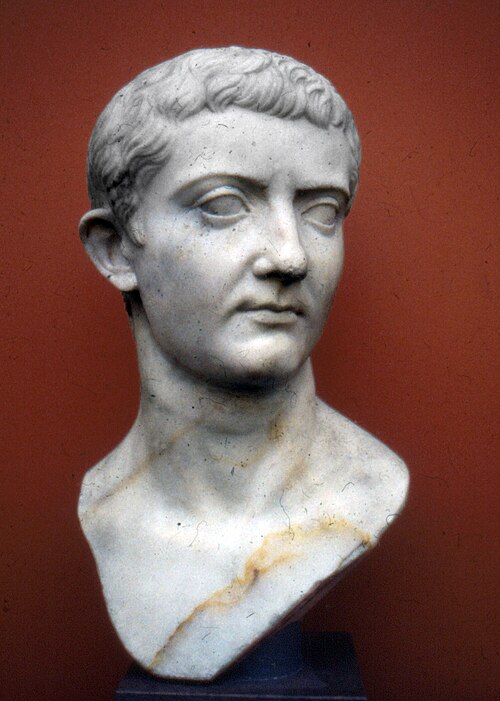
On the Emperor Augustus’ death in AD 14, Tiberius became princeps at the age of 55. Although being a successful general and tough soldier, it seems he accepted the responsibilities of head of state with great reluctance and perhaps a genuine sense of inadequacy, as he had a tough act to follow in the self-confident and much-loved Augustus. He ruled well, if not a little aloof from his people, and is arguably the least well-known Caesar of the Julio-Claudian dynasty, which lasted from 27 BC – 68 AD.
Tiberius Claudius Nero was born on 16 November 42 BC. He was a member of the Claudian clan, on both his father’s and mother’s side, with its reputation for derring-do on the battlefield and political skill in the Senate House, in the service of the Res Publica (the Commonwealth). As with his ancestors, he was a stern defender of liberty and of free speech.
Some found his bearing and habits as eccentric, his stern look and forward-leaning gait, and his use of obscure Latin words, were to some unsettling. He quickly gained a reputation as sullen, perhaps unfairly. Pliny the Elder in his Natural History, published forty years after Tiberius’ death, said he was the gloomiest man alive. He was, according to many, pale-skinned, broad-shouldered, left-handed, very strong and exceptionally tall for a Roman.
Tiberius was an intelligent and curious man, he collected art works, paintings and statues, wrote poetry in both Latin and Greek, grew vegetables, practiced astrology, kept a pet snake, liked to debate with close friends, and drink wine.
As a young man he married Vipsania, daughter of Augustus’s boyhood friend, the general and intended heir, Marcus Vipsanius Agrippa. It was a happy marriage and they had a son, Drusus Julius Caesar. In 38 BC, the Emperor married Tiberius’ mother, Livia Drusilla.
Once he was of age, Tiberius was picked by Augustus to undertake strategically important military operations in Pannonia, Dalmatia, Raetia, and for a short time, parts of Germania, in which he acquitted himself well. He was a no-nonsense disciplinarian, firm but fair with his troops who regarded him as a soldier’s soldier. Paterculus notes in his Roman History that Tiberius offered men wounded on the battlefield use of his carriage and personal medic.
When Marcus Agrippa died, Augustus forced Tiberius to divorce Vipsania and marry his step-sister Julia, Agrippa’s widow and Augustus’ daughter. Tiberius loved Vipsania deeply and was very upset, but he obeyed Augustus. This second marriage proved deeply unhappy for both of them and did not produce the heir Augustus wanted. Eventually, due to her scandalous behaviour, Julia was sent into exile by her father.
In 4 AD Tiberius adopted his nephew, Germanicus Julius Caesar, at Augustus’ urging, as his son. Germanicus was a successful military commander, and the father of the future emperor Caligula. He was made proconsul of parts of Germania, and all of Gaul. He commanded eight legions, around one-third of the entire Roman army, which he led against the Germanic tribes from 14 to 16 AD, when he avenged the Roman defeat by Arminius, who organised the Germanic tribes, in the Teutoburg Forest. Tiberius was said to be jealous of Germanicus and thought he was too popular with the public who would eventually call for him to take over as emperor. Germanicus thought he was being undermined by his colleague Gnaeus Calpurnius Piso, who had been appointed by Tiberius.
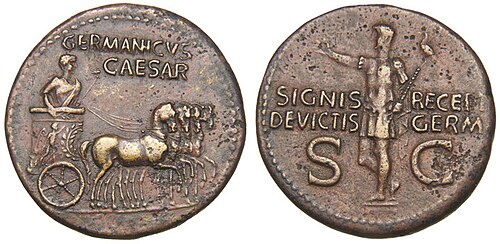
Germanicus died soon after in October 19 AD, and his death aroused speculation, with several people blaming Piso for poisoning him, acting under orders from Emperor Tiberius. This was never proven, and Piso committed suicide while awaiting trial. Many people thought Tiberius had Piso murdered before he could implicate him in Germanicus’ death. The death of Germanicus in these suspicious circumstances greatly affected Tiberius’s popularity, partly helping an atmosphere of paranoia and fear to grow in Rome.
Augustus had planned for Marcus Vipsanius Agrippa, his friend and confidant, to succeed him but he had died in 12 BC. His two grandsons Gaius Caesar and Lucius Caesar, as well as his nephew Marcus Claudius Marcellus all died young of illness and wounds received in battle, so Augustus had to adopt Tiberius as his son, effectively naming him as his heir.
On his deathbed, Augustus told Tiberius to hold the empire at its present limits. Tiberius followed the advice, for example he abandoned the hotly contested Germanic territory across the Rhine, thus securing the Empire’s northern boundary, and by implementing sound military and political policy, he ensured that the Roman Empire was strong enough to survive.
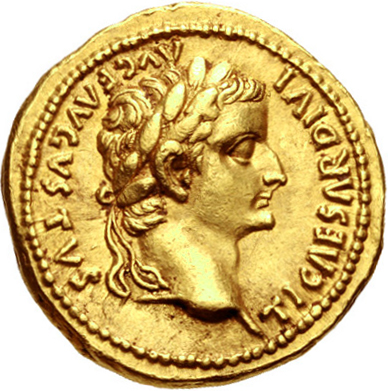
Tiberius hated waste and frivolous public spending, instead repairing and maintaining the existing stock of buildings. He finished bridges and temples started by Augustus but not finished at the time of his death.
Historians such as Suetonius and Tacitus say the people of Rome viewed Tiberius as a fine commander and statesman until he became princeps. They attributed the change in his attitude in part to him departing Rome for good in AD 26, leaving his feared deputy Lucius Aelius Sejanus effectively in charge. The citizens could not understand why he chose to retire to the island of Capri, referring to him dismissively as ‘The Exile’.
Tiberius contracted a disfiguring facial problem, possibly a severe case of herpes, an outbreak of which affected the Empire during his reign. He banned kissing at public functions in an effort to stop the disease spreading, and he also suffered from chronic bowel colic. It is possible these issues, and the embarrassment he felt, may have contributed to his retreat to Capri.
In AD 23, Drusus died in mysterious circumstances, possibly poisoned by Sejanus, who had been having an affair with Drusus’ wife, Livilla, and Tiberius didn’t name a successor for many years. It is known he suffered badly at this time with depression.
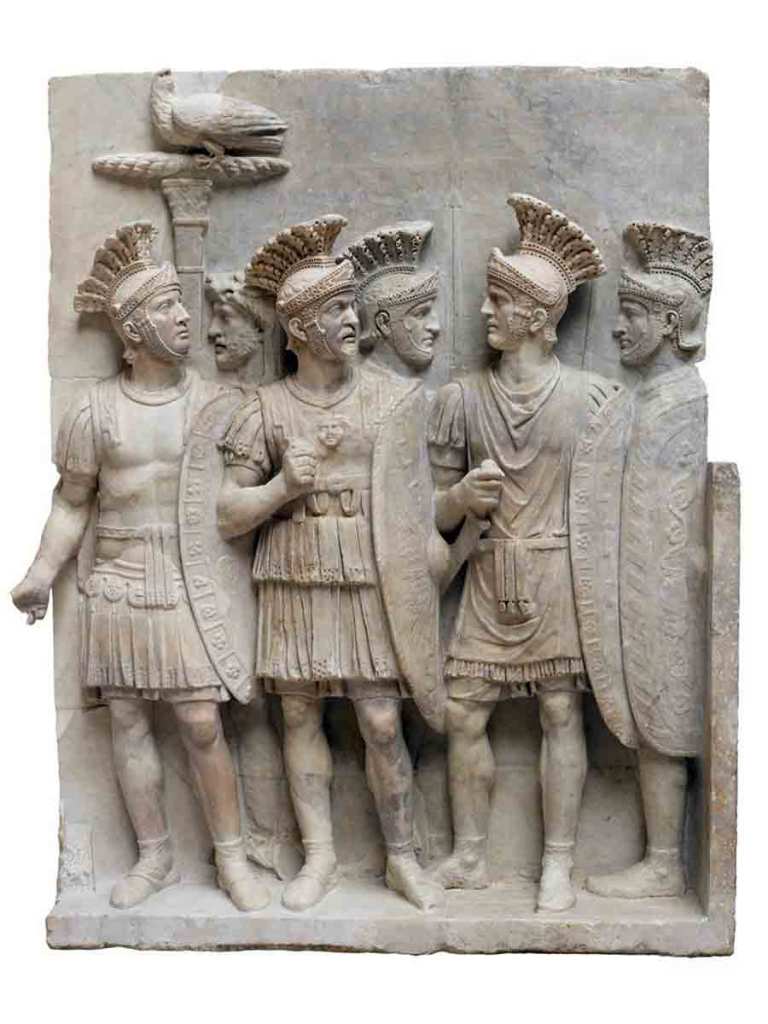
When the cruel and disloyal Sejanus was found guilty of a plot to overthrow Tiberius in 31AD, he was executed, and the Emperor resumed a higher profile role in public life: he managed the state through a severe financial crisis, and compensated many ordinary citizens after their properties in Rome were destroyed by fire.
It is known that Tiberius was nicknamed ‘The Old Man’ in his youth out of respect for his wisdom. The geographer Strabo praised him for the peace found in the empire and operating a well-run government.
Tiberius’ reign is marred by allegations that he indulged in depraved sexual acts, often with young boys. One story recounts how he had the legs of two young boys broken because they wouldn’t do as he asked. But written accounts dating from Tiberius’ own time make no mention of these things. The stories appeared when Suetonius and Tacitus, writing decades after Tiberius died, wrote about his life on Capri. It is quite probable that Tiberius was simply a loner, bitter after his forced marriage, who hated the hustle and bustle of Rome and political life, and decided to flee to a place of calm. He did however remain in constant communication with the Senate through official letters and communications, and kept the country running smoothly.
Caligula was Tiberius’ grand-nephew, and Tiberius had killed, or exiled most of his family, his mother, sisters and two brothers, on the grounds they wanted, or were involved in plots, to overthrow him (mostly at the suggestion of Sejanus – they were probably innocent of these accusations). The young Caligula alone survived and was taken to Capri to live, effectively being held hostage.
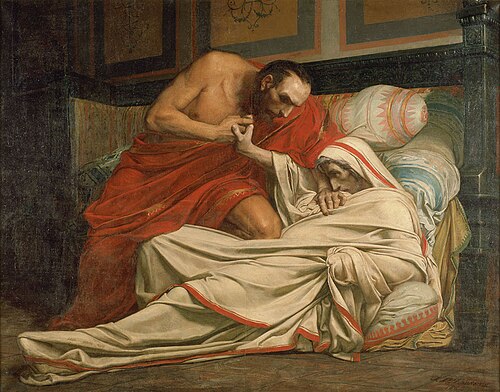
Tiberius died on the 16 March AD 37 at the villa once owned by famed Roman commander and statesman Licinius Lucullus at Misenum. Several salacious stories surround his death, including that he was smothered on his deathbed by his successor Caligula, or an officer of the Praetorian Guard named Naevius Sutorius Macro, but these are unfounded and Seneca the Elder says Tiberius died a natural death. His body was cremated, and the ashes were placed in the Mausoleum of Augustus in Rome, and Caligula became emperor.
Tiberius’ legacy has been tarnished by the stories of sexual depravity, and although we’ve seen these may be unfounded, crowds gathered in Rome on hearing of his death shouting ‘Throw him in the Tiber!’, such was the feeling against him. Tiberius left the Roman imperial treasury with nearly three billion sesterces, a tidy sum of money which was around twenty times more than he had inherited when he became Emperor. He did not embark on expensive military campaigns, choosing instead to strengthen the existing empire by building additional bases, using diplomacy, and refraining from getting drawn into squabbles with other countries. The result was a stronger, more consolidated empire, that ensured the ongoing success of the institutions introduced by Augustus, institutions that would remain in place for centuries.
 everythinglatin.co.uk
Leave a comment