Tag: Augustus
-

A Happy Roman New Year
The Romans celebrated the New Year as a time of new beginnings and fresh starts, and New Year celebrations in ancient Rome were full of symbolism and held huge significance. Janus, the god who the month of January is named after, was often depicted with one face looking backward and another face looking forward, representing…
-

Ovid’s banishment from Rome
Joseph Mallord William Turner (1775–1851) Ancient Italy — Ovid Banished From RomeExhibited 1838 Oil on canvas © The Metropolitan Museum of Art. Image source: Art Resource, NY This work treats the ancient poet Ovid’s purported exile from Rome, reconstructed here as a panoply of temples, triumphal arches, and statuary from different periods of the city’s…
-
A Happy Roman New Year
The Romans celebrated the New Year as a time of new beginnings and fresh starts, and New Year celebrations in ancient Rome were full of symbolism and held huge significance. Janus, the god who the month of January is named after, was often depicted with one face looking backward and another face looking forward, representing…
-
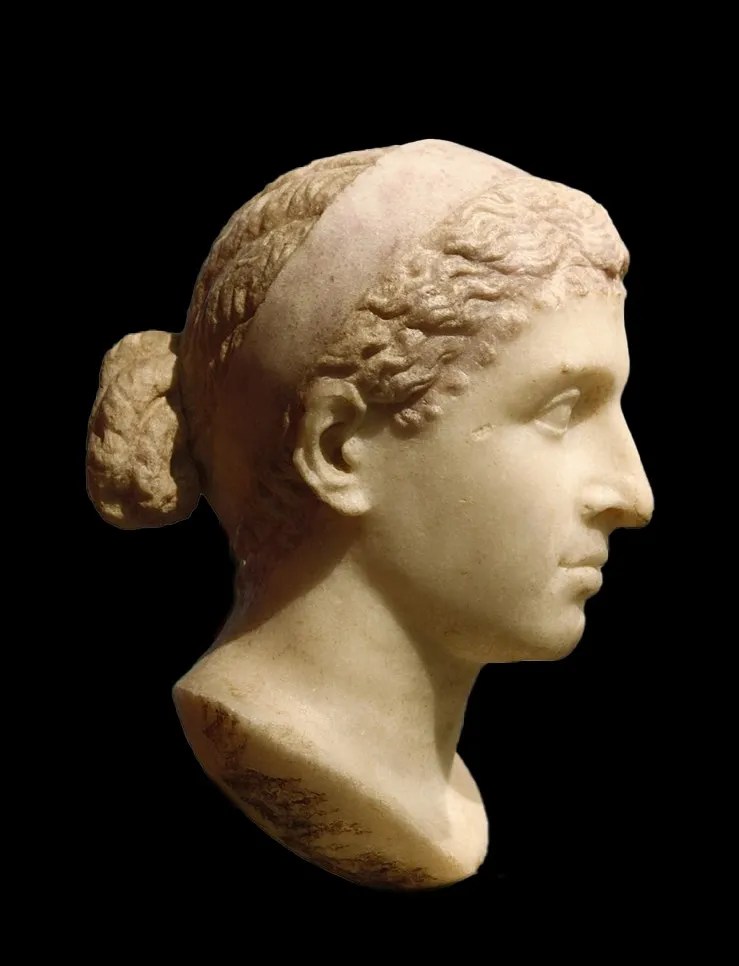
Cleopatra VII – Power, Romance & Rome
—
by
Bust of Cleopatra VII in the Altes Museum, Berlin Her full name was Kleopatra VII Thea Philopator, the title Kleopatra, is Greek for ‘Glory of her Father’, and she was the seventh female in the royal dynasty of Egypt to be called a Kleopatra. Although she was born in Egypt, she could trace her family…
-
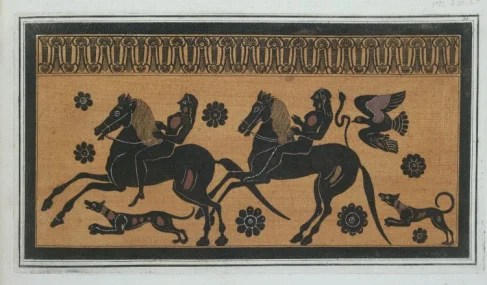
Castor and Pollux: The Legendary Twin Horsemen of Rome
Black-figure amphora depicting the Dioscuri on horseback. Dating to circa 500 BC, held in the British Museum In the southern sky during wintertime, near the constellations of Orion and Taurus there are two bright stars. Known in Greek mythology as the Dioscuri, (Dioscuri from the Greek Dioskouroi, meaning “Sons of Zeus”), they were twin supernatural beings who helped save shipwrecked sailors, usually by appearing…
-

Who was Julius Caesar?
In his The Life of Julius Caesar, par. 45-53 (translated by J.C. Rolfe), the ancient Roman historian Suetonius describes the appearance of Gaius Julius Caesar as follows: “They say he was tall, fair-skinned, well-built, with a full face, black and lively eyes. He was distinguished by excellent health: only towards the end of his life…
 everythinglatin.co.uk