Category: Roman Republic
-
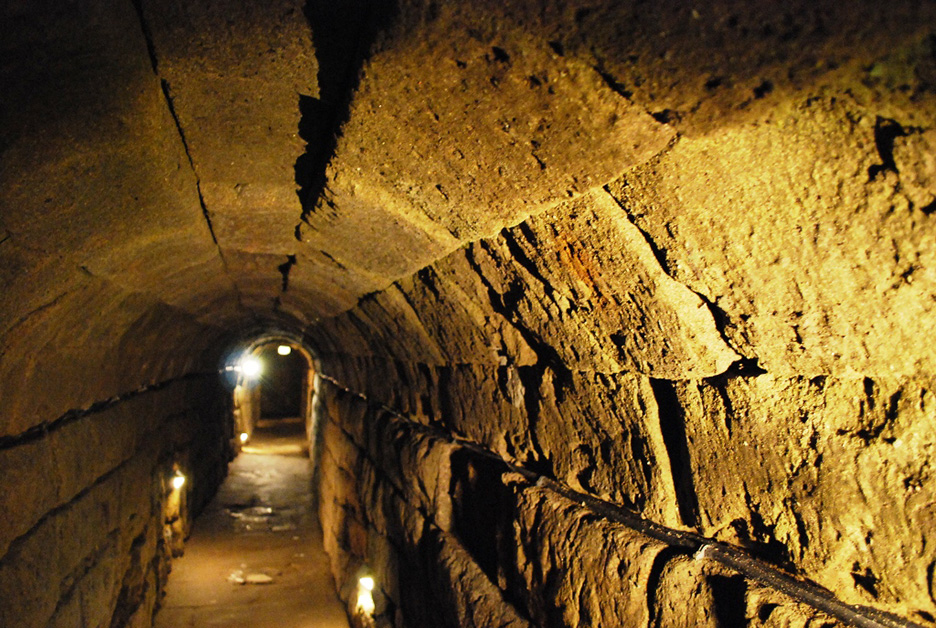
Cloaca Maxima: The Greatest Drain
Built in Rome two thousand years ago, this underground sewer, a vaulted tunnel called Cloaca Maxima (meaning “the greatest drain”) was constructed from massive blocks of volcanic rock and limestone, and, along with concrete, aqueducts, ampitheatres and an amazing network of almost straight roads linking distant provinces to the capital, it is another testament to…
-
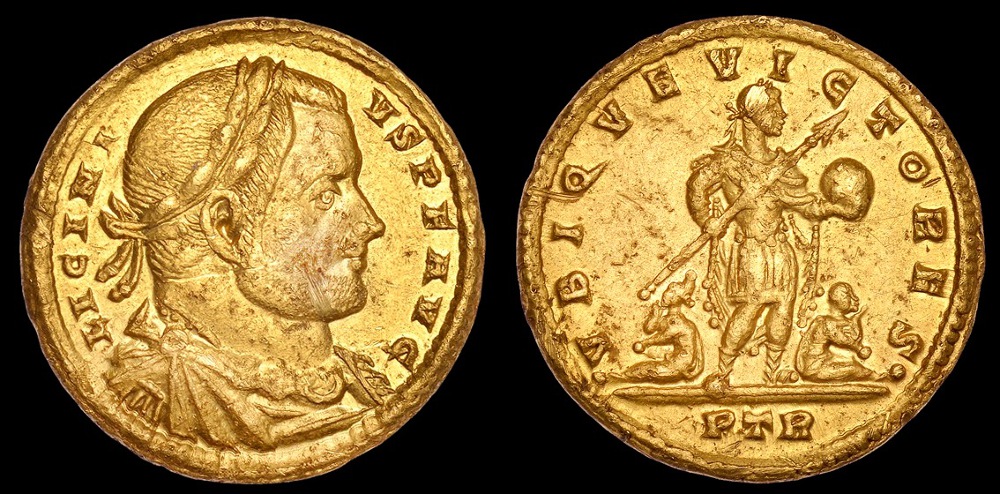
Rare Roman gold coin discovered in Wiltshire UK
An extremely rare 1,700 year-old Roman gold coin discovered by a metal detecting enthusiast in South Wiltshire fetched £30,000 at an auction in London. Dix Noonan Webb offered the coin for sale in December 2013, it being one of only four known examples of a Gold One and Half Solidus from the reign of Emperor…
-

A Happy Roman New Year
The Romans celebrated the New Year as a time of new beginnings and fresh starts, and New Year celebrations in ancient Rome were full of symbolism and held huge significance. Janus, the god who the month of January is named after, was often depicted with one face looking backward and another face looking forward, representing…
-

Girls and Dolls in the Roman Empire
Published in JSTOR, the nonprofit library for the intellectually curious, by Nora McGreevy on March 28, 2021 Analysing the dolls of elite girls shows that playthings reinforced gendered expectations but also allowed for imaginative play. Barbie dolls tend to get a bad rap. Critics rebuke them for promoting harmful body standards and other sexist tropes in the minds of young…
-

Arausio: Rome’s single bloodiest day
Of the military defeats inflicted upon the Roman Army, none brought such sudden destruction as the Battle of Arausio in early October 105 BC. Arausio was a local Celtic water god who gave his name to the town where Rome was to suffer one of their greatest ever military defeats in a single day Two Roman armies…
-

How the Romans kept poisonous, narcotic seeds concealed in bone vials
The hollowed-out animal bone was used to store poisonous seeds during the Roman era. (Image credit: BIAX Consult) By Jennifer Nalewicki, published in Live Science February 8, 2024 Nearly 2,000 years ago, someone used a hollowed-out piece of bone as a container for storing hundreds of poisonous seeds. Archaeologists found the carved-out animal femur, or thigh bone, which…
-

Octavian
”Better a cautious commander, and not a rash one” When Julius Caesar and his his legions had finished their conquest of Gaul, a million Gauls and Germans were dead, and a million more were enslaved. In his decade-long conquest of what is today France, Belguim, North-West Italy and a small part of the Rhineland, Caesar…
-
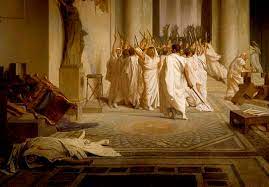
The Dramatic Funeral Procession of Julius Caesar
This article was posted on June 18, 2021 by Ron Current stillcurrent.blog/2021/06/18/the-roman-forum-searching-for-caesar I thought it was really interesting read and it is something that isn’t common knowledge for a lot of people. Peter Stothard’s book The Last Assassin details a part of the story behind Current’s article, it’s a great read and was published by Weidenfeld &…
-
Momento Mori
Remember that you must die – The ”Memento Mori” Mosaic dated to the mid-first century AD, before the Mt. Vesuvius eruption (photograph by Erich Lessing in Art Resource) In Roman culture, there was a belief in life after death and that the soul lived on after the person had died. The Romans believed that after…
-

Raunchy, Rowdy, and Rotten: Provocative Poetry in Ancient Rome
—
by
Please be warned, the content of this post is (very) adult in nature. ”In around A.D. 64, Marcus Valerius Martialis (A.D. 31-41 to 103), better known as Martial, arrived in Rome aged 26 from his Spanish hometown of Bilbilis, famous then for its iron mines and for the manufacture of steel, and a center of Roman…
 everythinglatin.co.uk