
Published in JSTOR, the nonprofit library for the intellectually curious, by Nora McGreevy on March 28, 2021

Analysing the dolls of elite girls shows that playthings reinforced gendered expectations but also allowed for imaginative play.
Barbie dolls tend to get a bad rap. Critics rebuke them for promoting harmful body standards and other sexist tropes in the minds of young children.
But some scholars note that the dolls also allow for versatile, wide-ranging play, because of their lack of prescriptive narratives. Despite their faults, Barbies can become anything—or anyone—the child wants them to be.
As classics scholar Fanny Dolansky argues, it’s possible to apply a similar line of thought to the dolls of young Roman girls from the second to the fourth century. Over 500 objects excavated from the Roman Empire have been identified as dolls, primarily girls’ playthings, and over a dozen have been buried in tombs of young girls.
Dolansky surveys eighteen dolls discovered in modern-day Italy, Spain, Switzerland, and Egypt. Made from bone, ivory, or cloth, the dolls range in length from 15 to 30 centimeters and resemble upper-class adult women, with molded breasts and delineated genitalia. (Dolansky limits her research to the lives of girls from the highest echelons of Roman society; unfortunately, few examples of lower-class children’s playthings have survived.)
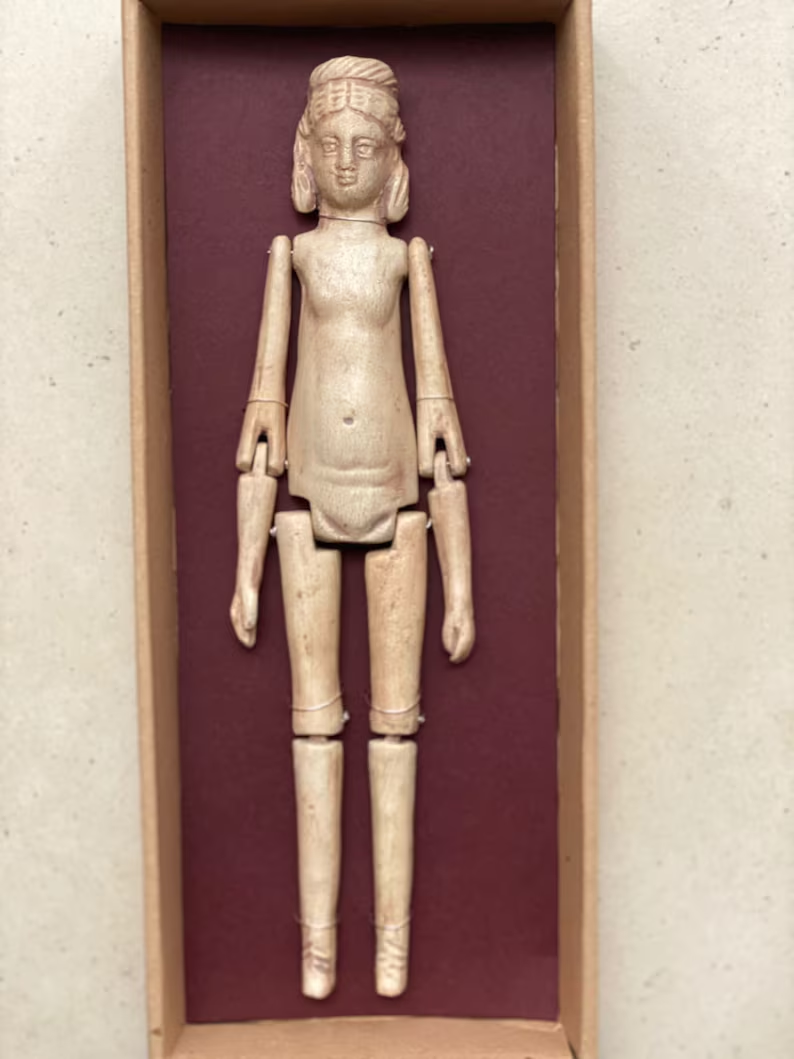
These toys carried strong messages about girls’ expected roles in society. Like modern Barbies, they mirrored the body ideals of Roman times, in this case small breasts and wide hips. Because they resembled adult women, they were likely intended to help young girls contemplate their future as wives and mothers.
Dolls also wore miniature rings, jewels, and sometimes even removable clothing, which young girls might have used to learn about their own bodies and to practice dressing themselves.

With their emphasis on adornment, these toys “embodied a particular ideal of upper-class, adult femininity—a perfectly coiffed, highly polished exterior that reflected discipline, control, and countless hours of ‘cultivation,’” Dolansky writes. Upper-class women would enlist enslaved hairdressers, ornatrices, to use hairnets, snoods, and pins to arrange their hair in highly stylized arrangements. This outward orderliness communicated a moral message about its wearer—namely, inner control.
The dolls also reinforced class status. One ivory figure buried with an eight-year-old girl in the second century mimicked the hairstyle of Faustina the Younger, the wife of Marcus Aurelius, who was known for her imperial charity toward lower-class girls in the city of Rome. As girls played with models of imperial power, they also reinforced their own understanding of their place in elite society, Dolansky reasons.
 everythinglatin.co.uk
Leave a comment