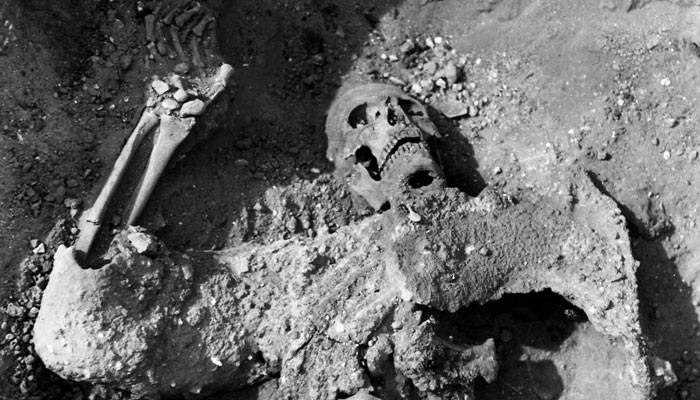
Courtesy Yale University Art Gallery, Dura-Europos Excavation Archive
by Selme Angulo, and fact checked by Darci Heikkinen on 20th July 2023
In 256 AD, a war was being fought between the Romans and the Sasanians, and some brutal fighting took place during the awful Siege of Dura-Europos in what is now Syria. Europos, an old Macedonian-Greek military colony known to Syrians as Dura, ‘the stronghold’, had become the base for repeated Roman military invasions of the Parthian Empire.
The Sasanians were the rulers of the Sasanian Empire, a dynasty that ruled Persia (modern-day Iran) from 224 to 651 AD. They are known for rivalling the Roman Empire for dominance in the Near East and beyond. The Sasanian dynasty originated from a local kingdom in the south-western province of Persia and later rose to become the “kings of kings,” the ancient imperial title of Western Asia.
The Sasanian Empire extended its influence across a vast territory, including modern-day Iran, Iraq, Armenia, Georgia, parts of Southeast Asia, and even Egypt and Syria for a brief period. They challenged the Roman Empire, and later the Byzantine Empire, for control of the eastern Mediterranean and Near East.
The Romans could not tolerate this kingdom challenging them so started the ongoing Parthian War, during which they occupied the border town of Dura-Europos, and during the fighting an enemy tactic completely suprised them and led to disaster. The Sasanians had cunningly dug tunnels beneath the town’s outer wall, which had encouraged the Romans to respond with their own tunnels.
When the two groups of soldiers met, the Sasanians had a devastating surprise ready. They ignited braziers containing pitch and sulphur which created a lethal cloud of sulphur dioxide, that in the confined space caused fits of coughing, burning, breathlessness, and pulmonary edemas before becoming a death trap for the charging Roman soldiers.
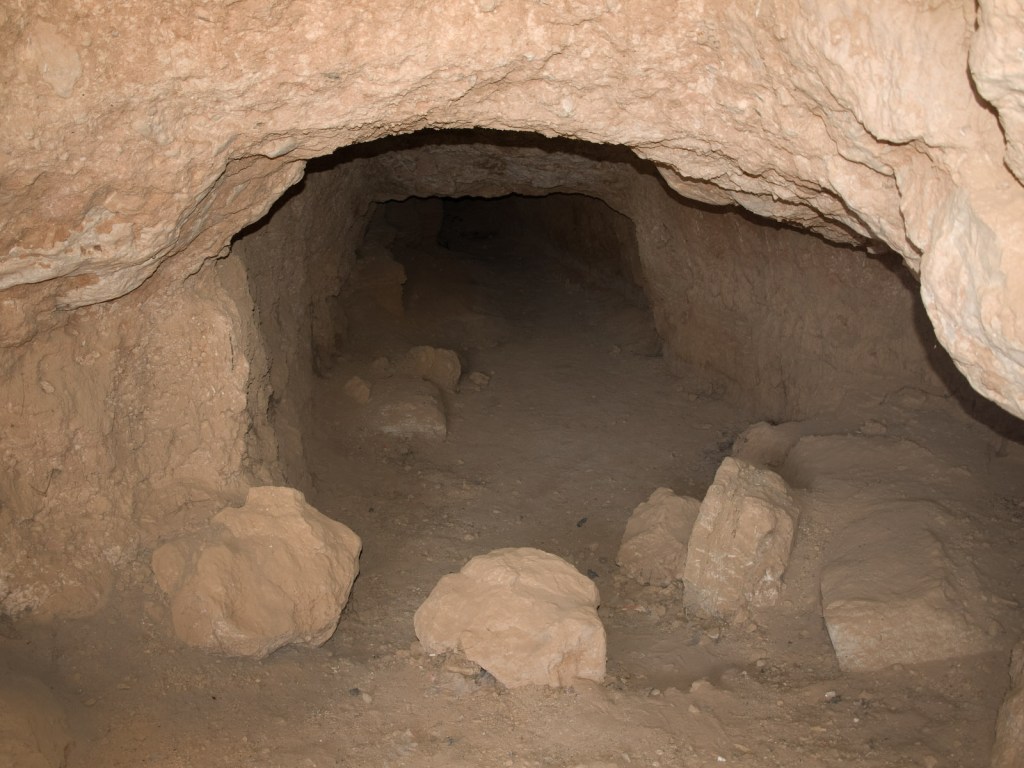
The chaotic conditions of panic in the claustrophobia darkness, hindered the Romans from retreating. The gaseous assault claimed the lives of twenty soldiers that would make it potentially the earliest documented case of chemical warfare in history. Sadly, we don’t know much more about the siege or its aftermath, but Roman writings seem to document some kind of chemical attack.
Archaeologists who found the skeletons in the 1930’s assumed they had died in a tunnel collapse, but University of Leicester archaeologist Simon James thinks they met a more unusual demise, as victims of chemical warfare.
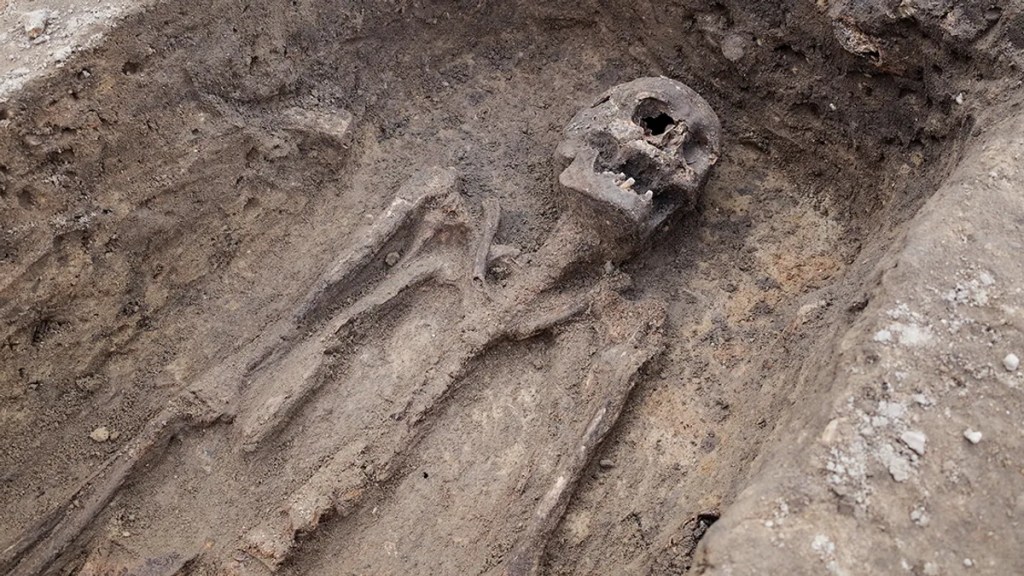
Re-examining the site as if it were a crime scene, James noted that the bodies of the soldiers had been deliberately stacked where the Roman and Sasanian tunnels met. The Sasanians had apparently used their enemies’ bodies as a barricade, behind which they could light a fire to collapse the tunnels and bring down the wall. But how had the Persians killed so many Roman soldiers in such a dark, confined space? “The Persians would have heard the Roman counterminers and, I believe, prepared a deadly surprise for them,” says James.
James speculates that the soldiers pumped these gasses through the tunnel using bellows, as had been used before to smoke out enemies in similar battles. It’s also possible that the relative heights of the tunnels – the Romans’ being above – helped spread the gas in their direction, sealing their fate.
Within a few seconds, he writes, the Roman soldiers were choking to death and trying to stagger away from the “sulphurous clouds of Hell” as they followed them down the tunnel. Nineteen of the Romans died, and they were dragged, “some perhaps still alive”, to create a blocking wall. One Sasarian soldier, it appears, was also killed by the fumes. To obstruct advancing Romans, the Sasanians blocked the tunnel entrance with stones before stacking up the Roman victims. The Sasanians then threw a cloak and some straw on the Romans and set them on fire using a mix of pitch and sulphur.
Based on chemical residues and sulphur crystals in the tunnel, he concluded that the Sasanians readied braziers of pitch and sulphur, and lit them as the Romans broke through. The resulting cloud of sulphur dioxide, rising into the higher Roman tunnel, could have knocked the soldiers out in seconds, with their only escape from the dark, narrow space blocked by their comrades behind them. The single Sasanian soldier in the tunnel was, “I believe [to be] the man who started the fire,” says James. “Lingering too long to ensure it was properly alight, he was himself overcome by the fumes.”
James also excavated a ‘machine-gun belt’, a row of catapult bolts, ready for use by the wall of the Roman camp inside the city, representing the last stand of the garrison during the final street fighting, though the defensive wall did not fall. But eventually the Sasanians broke through, and killed or deported everyone in Dura, and left the city to fall into ruin. “The bodies probably constitute the earliest archaeological evidence, albeit circumstantial, of gas warfare,” says James.
 everythinglatin.co.uk
Leave a comment