Reported by Jill Lawless
Developers have agreed to incorporate the remains into its plans and put them on display
Beneath the foundations of a planned 32-story skyscraper in London, archaeologists have unearthed a remarkable vestige of the city’s Roman past: the remains of a basilica that once stood at the heart of Londinium.
The discovery, announced on Thursday, offers a glimpse into the city’s ancient origins, juxtaposing the modern drive for vertical expansion with the enduring presence of history beneath our feet.
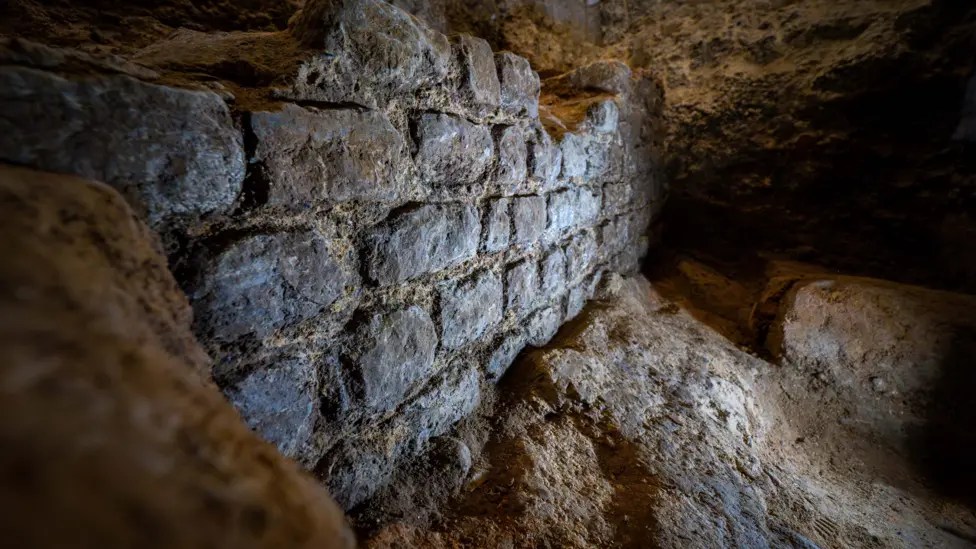
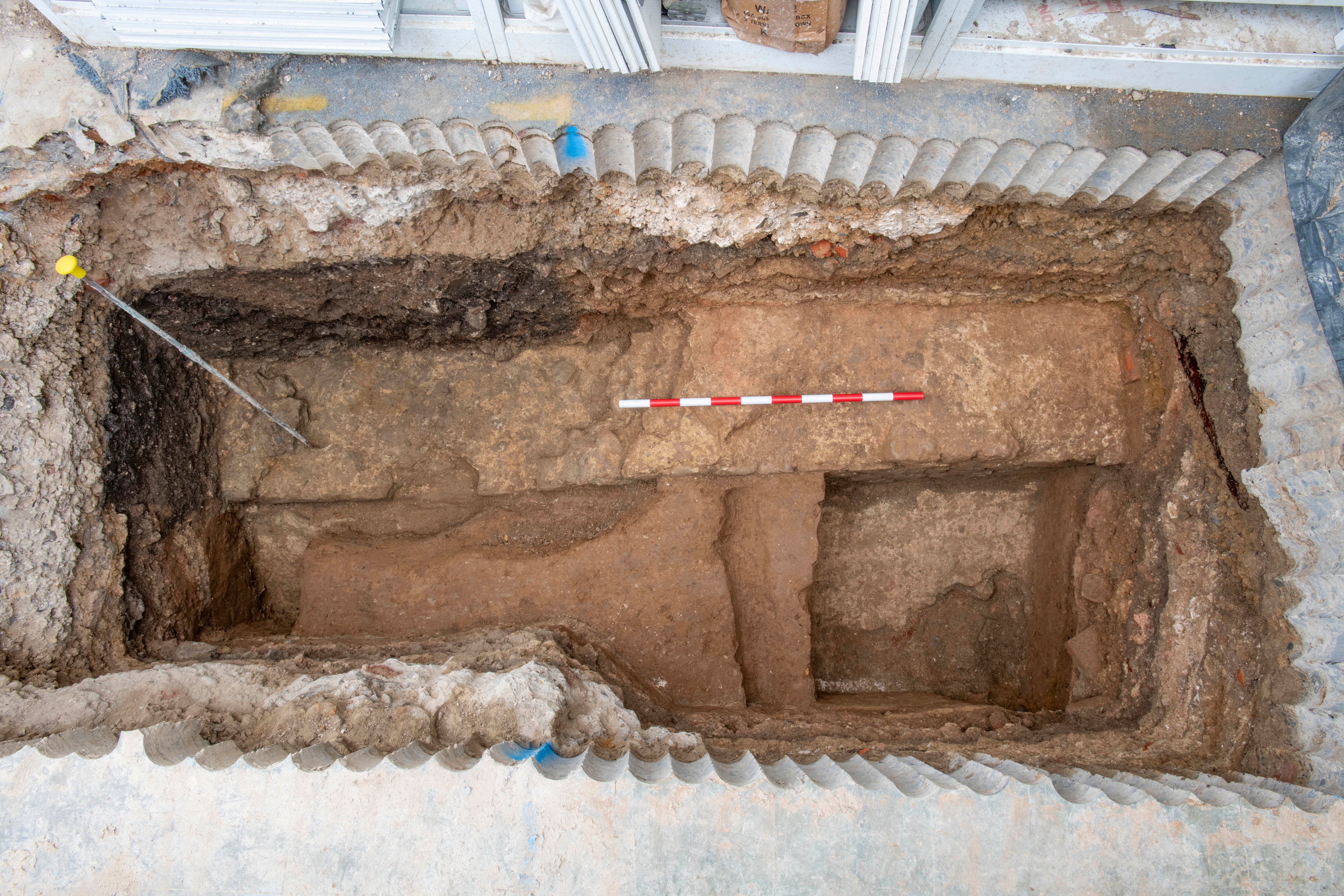
Excavations at 85 Gracechurch Street, in the heart of London’s financial district, revealed substantial flint, brick, and ragstone walls and foundations, some measuring up to 1 meter wide and 4 meters deep. These two-millennia-old remnants are believed to be part of a two-story basilica, nearly the size of an Olympic swimming pool, constructed between 78 and 84 AD. This period marks a few decades after the Roman invasion of Britain and two decades after the rebellion led by Queen Boudicca.
Sophie Jackson of the Museum of London Archaeology hailed the find as “one of the most significant discoveries” in recent years within London’s oldest quarter, the City. This square-mile area, now dominated by modern skyscrapers, sits atop layers of history, from Victorian and medieval structures to these newly discovered Roman remains.
The basilica formed a key part of the Roman forum, the bustling center of Londinium’s social, political, and commercial life. It was a place where citizens gathered to shop, socialize, seek justice, and receive pronouncements from political leaders.
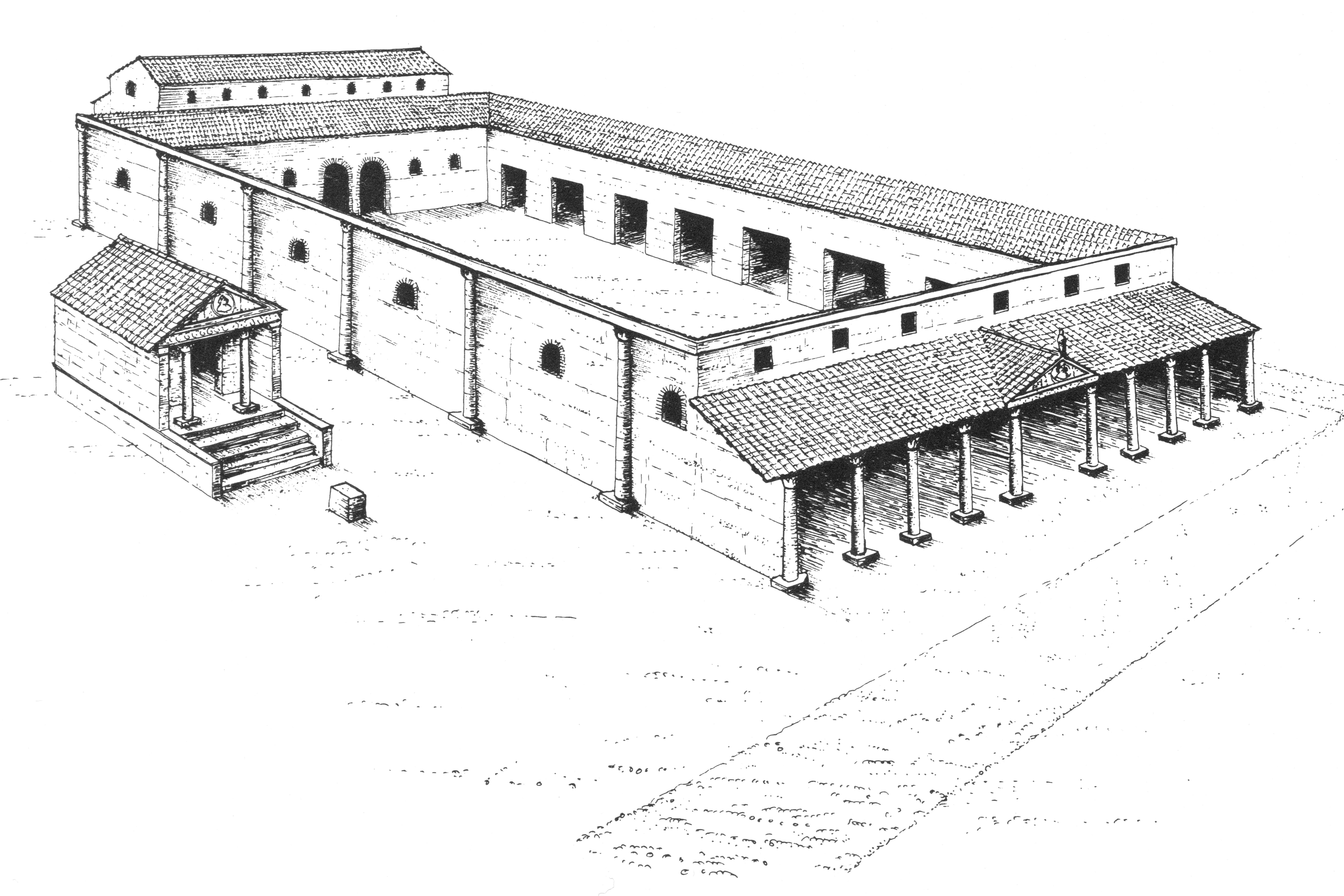
The unearthed foundations are thought to belong to the tribunal, a raised platform within the forum where officials made decisions concerning the city’s governance. This discovery provides valuable insights into the workings of Roman London and underscores the rich historical tapestry that lies beneath the modern cityscape.
“It’s the beating heart of the city,” said Andrew Henderson-Schwartz, head of public impact at Museum of London Archaeology. “It kind of towers above the city. And so it’s a real symbol of Roman power and authority.
“We’re talking about the early stages of London here, but it’s a real sign of investment in the city, even in its early infancy,” he said.
Developer Hertshten Properties, which owns the site and has planning permission for a new office tower, has agreed to incorporate the remains into its plans and put them on display in a visitor center.
Henderson-Schwartz said the extent of the “absolutely massive” foundations discovered in several test pits suggests an “extraordinary” level of preservation.
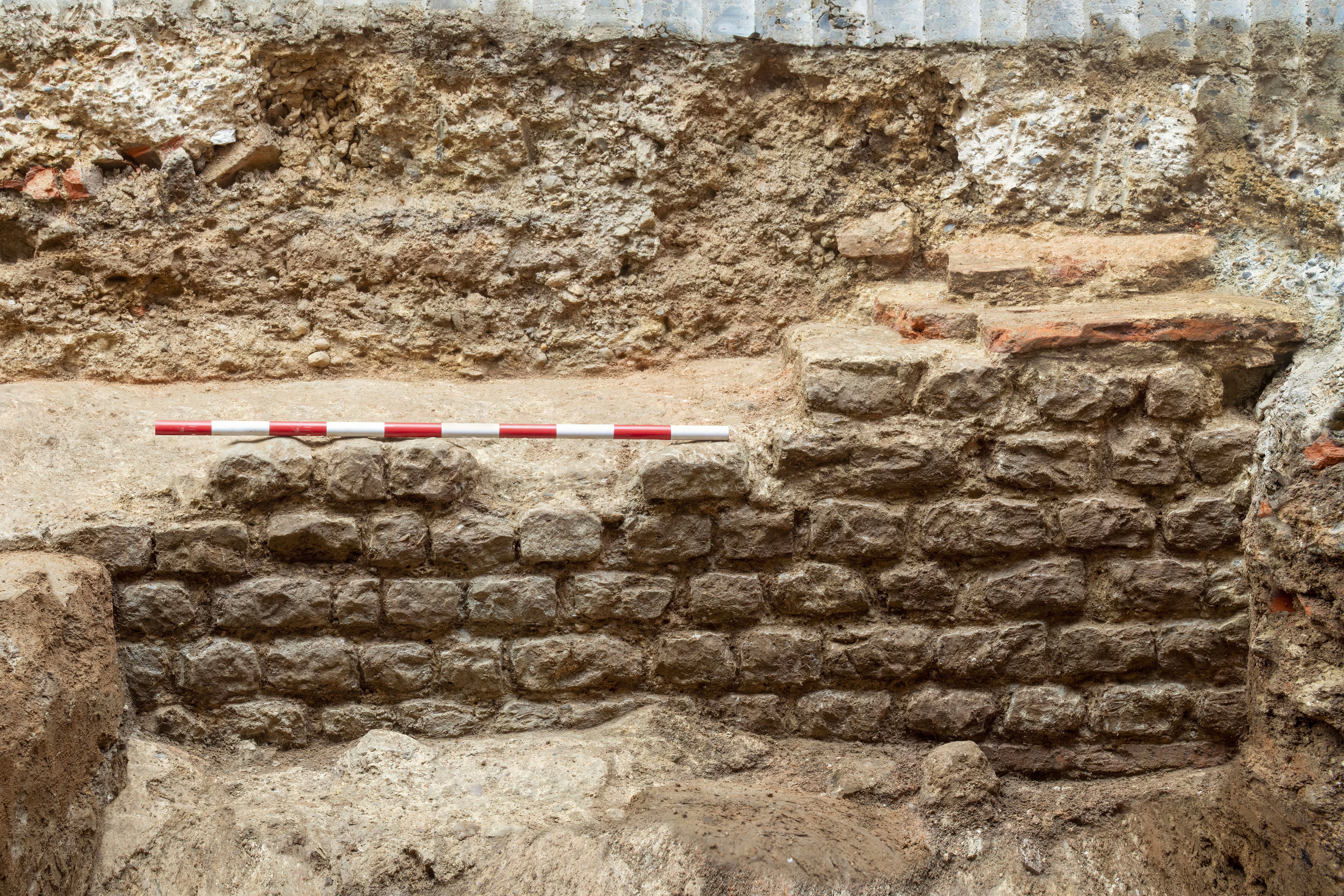
Further digging could answer intriguing questions, including why the original forum was only used for 20 years before being replaced by a much larger one, which remained in use until the collapse of Roman rule in Britain three centuries later. Items such as writing tablets, styluses — even ancient trash — could give glimpses into the daily lives of Roman Londoners.
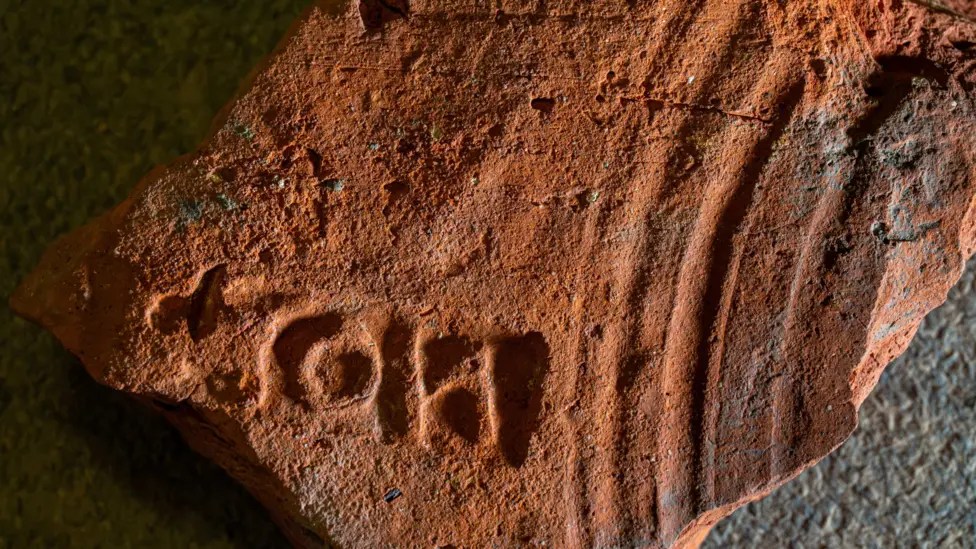
Property developers in Britain routinely have to consult archaeologists as part of their planning process, a practice that has uncovered finds from Saxon jewelry to medieval ice skates to the skeletons of 14th-century plague victims.
The latest discovery adds to the scant traces of Roman London that can be seen around the city, including a section of ancient wall, a portion of amphitheater beneath the Guildhall and a temple to the god Mithras which lies incongruously under the modern headquarters of information company Bloomberg.
“We do have these little windows into Roman London that are all over the city,” Henderson-Schwartz said. “But this is really in some ways the site that connects them all together. This is the heart of Rome in London, where all the decisions were made.”
Below is a recently published, and very interesting article on the excavation of the town and port of Interamna Lirenas in Italy, and its part in the supposed ‘collapse’ of the Roman Empire.
Excavation that helps rewrite the ‘Fall’ of the Roman Empire
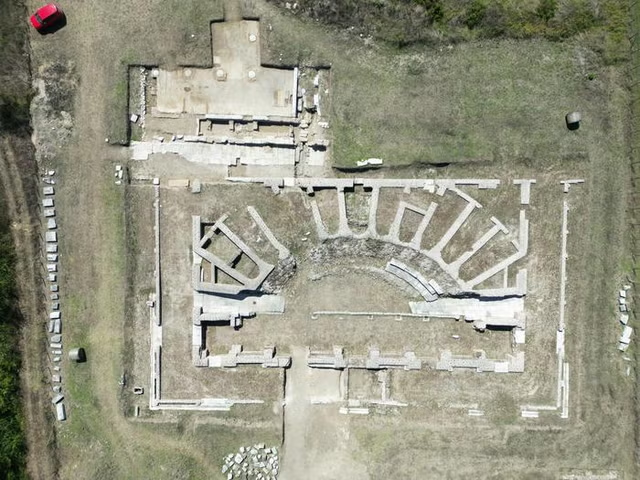
The discovery changes the whole timeline of the collapse [of the Roman Empire]. By Tim Newcomb and was published on March 5th 2025
- A 13-year archeological excavation has shown that what was once believed a backwater town for the Roman Empire lasted far longer than originally believed.
- Interamna Lirenas was a thriving town well into the 3rd century AD.
- A geophysical survey has allowed researchers to build a highly detailed image of the town’s layout, with an impressive list of urban features.
Interamna Lirenas has turned out to be far more than a “backwater town” of the Roman Empire. According to a published study in Roman Urbanism in Italy, this central Italian town thrived well beyond previous belief, using its impressive urban features and forward-thinking design to stave off the effects of the empire’s collapse well into the 3rd century AD.
“We started with a site so unpromising that no one had ever tried to excavate it,” Alessandro Launaro, the study’s author and Interamna Lirenas Project lead at the University of Cambridge’s Classics Faculty, said in a statement. “That’s very rare in Italy.”
The team was astonished by what they found. From a roofed theater and market locations to warehouses and a river port, the discovery pushed aside assumptions previously held about the area and the decline of Roman Italy. It turns out that Interamna Lirenas survived for around 300 years longer than previously believed, and was a flourishing town to boot.
There was nothing on the surface, no visible evidence of buildings, just bits of broken pottery,” Launaro said. “But what we discovered wasn’t a backwater, far from it. We found a thriving town adapting to every challenge thrown at it for 900 years.”
The team believes that the proof is in the pottery. By focusing on common ware pottery used for cooking—and not the imported pottery that often shows evidence of high-status living—the team could better map the location and dates of citizen movement in the region. This evidence showed that instead of the town’s size peaking in the late 2nd or early 1st centuries BC, as previously believed, the town staved off decline until the later part of the 3rd century AD.
“Based on the relative lack of imported pottery,” Launaro said, “archeologists have assumed that Interamna Lirenas was a declining backwater. We now know that wasn’t the case.” Instead of favoring imported pottery, the town—which was likely home to about 2,000 residents—was busy making their own way.
Thanks to a found inscription, researchers also believe that the town was likely visited by Julius Caesar in 46 BC, likely because Intermana Lirenas was part of a regional urban network and ideally situated between a river and major road.
“This town continually played its cards right,” Launaro said, “it was always forging relations with communities between Rome and southern Italy while thriving as a trading hub.” Of course, the River Liri may have helped in that department—the town may have served as a river port. Archeologists also found evidence of warehouse measuring 131 feet by 39 feet, which was likely used to hold goods for widespread trade. There was also a temple and bath complex—one of three in the town—near the port.
“River ports didn’t just need warehouses,” Launaro said. “People spent a lot of time working and resting in the vicinity, so they needed all kinds of amenities, just like the ones we found here.”
Interamna Lirenas wasn’t just a port, though. Archaeologists also found a roofed theater, roughly 147 feet by 85 feet in size and large enough to seat 1,500 visitors. “The fact that this town went for a roofed theater, such a refined building, does not fit with a backwater in decline,” Launaro said. “This theater was a major status symbol. It displayed the town’s wealth, power, and ambition.”
The theater was in a state of growth, not decline. The team found evidence of a wealthy donor backing what was likely an improvement to the structure. And combined with other evidence, that shows that the theater was in full use throughout the life of the town.

 everythinglatin.co.uk
Leave a comment