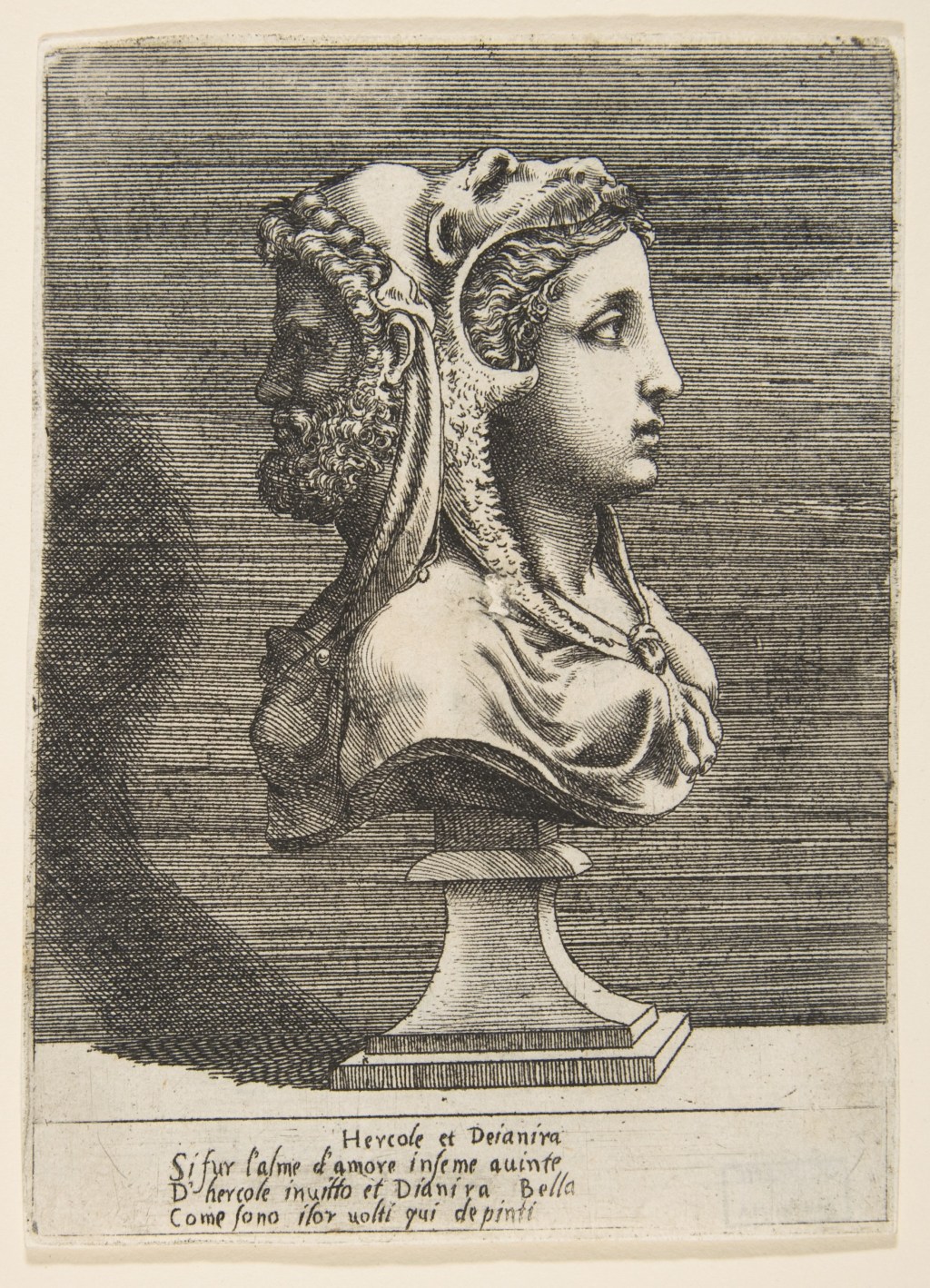
Praise for Tales from Ovid:
‘A breathtaking book…To compare his versions with the Latin is to be awestruck again and again by the range and ingenuity of his poetic intelligence…He rescues the old gods and goddesses from the classical dictionaries and gives them back their terror. There should be a copy of his book in every school’. John Carey Sunday Times
Taken from Tales from Ovid, 24 Passages from the Metamorphoses, published by Faber and Faber Ltd 1997. Copyright Ted Hughes, 1930 -1998
Hercules, the son of Jupiter,
Was bringing his new bride home
When he came to the river Evenus.
Burst banks, booming torrent
Where there had been a ford. Hercules
Had no fear for himself, only for his wife.
A centaur galloped up. This was Nessus
Familiar with the bed of that river.
Broad haunch, deep shoulder, powerful vehicle
For forcing a way through strong water.
‘Let me take her over’ he offered
‘Big as you are, Hercules,
You will be swept off your feet, but you can swim’.
Thinking only of getting her across
This earth shaking menace
That stunned the air with mist,
The Boeotian hero hoisted his darling
Onto the Centaur’s back.
Dejanira clung there, white with fear –
Paralysed
Between her dread of the river
And her dread of the goat-eyed centaur.
Who now plunged straight into
The high – riding boils of brown water.
Hercules wasted no time either.
He hurled his club and his heavy bow
Right across to the far bank, and muttered:
‘No river resists me’.
Then without pausing
To seek some broader, quieter reach of water,
Leapt in as he was, at the narrowest place,
Dragging the drouge of his arrow quiver
And the ponderous pelt of the lion,
Breasting the race right there, where it tightened
In a blaze of brown foam through the narrows.
He came out hard – skinned and glistening
On the other side
And he had just picked up his bow
When a human scream tossed clear
Of the river’s rumbling stampede
And he saw Nessus
Galloping away with Dejanira.
‘You fool’, roared Hercules
‘Do you think you horse hooves are equal
To you mad idea?
Do you think you can plant your family tree
Between me and mine?
Nessus the cure for you is on its way.
Neither respect for me
Nor your father’s howls in hell
Chained on his wheel of fire
Can deflect you from the forbidden woman.
But I shall overtake you,
Not on my feet, but flying
On the feather of a weapon’.
As these words left the mouth of Hercules
His arrow arrived,
And Nessus was looking down
At the barbed head, raw with blood,
Jutting from his breastbone
Before he felt it splinter his vertebrae.

He wrenched the arrow clean through him
And the blood burst free,
Thudding jets, at front and back –
Blood already blackened
By the arrows medication –
The lethal juices of the Lernaean Hydra.
This blood brought a last brain-wave to Nessus.
He saw its use. ‘Let me’, he groaned,
‘Leave an avenger behind me’.
Then stripping off his shirt
And soaking it in the hot fountain
Pumping from his chest
Gave it to Dejanira.
‘With my dying words,’ he whispered,
I give you this love charm, to win man’s love.
No man who wears it can resist it.’
The years went by. The triumphs of Hercules
Grew familiar to the whole world
As did Juno’s hatred of him.
His conquest of Oechalia,
That looked like just another, was his last.
Returning from this victory, intending
To offer up thanks to Jupiter
At Cenaeum, on flaming altars,
Hercules himself was overtaken
By a whisper,
By rumour –
Rumour who loves to spice big bowls of the false
With a pinch of the true,
And who, gulping her own confections,
Grows from nearly nothing to fill the whole world.
Rumour reached his wife well before him
And offered her something irresistible,
Telling her that her husband, the tower of man,
Had fallen for Iole. What you fear
Overtakes you. Dejanira
Had always dreaded this moment.
Her screams had waited too long
For exactly this. After the screams
She fell to the ground sobbing.
But straightaway pulled herself together:
‘Why wail – except to amuse my rival?
She’ll be at the door any minute
A plan! Cunning!
The brain – before it’s too late!
Before he marries her.
Scold? Or be silent?
Go home to Calydon, and hide there
Under your father’s throne?
Or sit it out here?
Disappear, and mystify both –
Or stay and poison their pleasures
With my noise and nuisance
If nothing else?
Or remind myself I am the sister
Of Meleager
And frighten the life out of everybody
With the way I kill her –
Illustrating my agony on her body,
Demonstrating, incidentally,
What it means to be jilted?’
As she revolved her options
She recalled the dying gaze of the centaur –
And his last breath – making sacred
The promise in the strawberry shirt of blood.
She saw her perfect solution
Unknowing as she was
Of any hidden meaning in the garment
This unfortunate woman handed the shirt
That would complete her misery
To Hercules’ factotum – one Lichas.
She called it a welcoming,
A homecoming gift, for her husband.
Unknowing as she sent it, the hero received it –
Put off his Lion pelt
And pulled over his shoulders the bile
That made his arrows fatal –
Bile crushed from the gall
Of the Hydra so famously defeated.
He had lit the first altar flames
For the high god.
Now he sprinkled incense into the flames
Chanting his prayers of gratitude, and pouring
Wine from goblets over the altar marble.
But already the venom in the weave of his shirt,
Softened and activated
By the heat of the altar,
Was soaking into his skin.
It reached and touched his blood. Then of a sudden
Struck through his whole body.
Amazed at the flush of pain
But refusing to acknowledge it
Or that anything of the sort could be happening
To him
Hercules for a while
Did not even gasp.
He thought he had shrugged off worse.
Then came a bigger pang –
A prong of pure terror
That jabbed his very centre
And opened
A whole new order of agony.
At last he understood.
His roar shook the woods of Oeta.
His frantic hands knew they were too late
As he scattered the altarstones and tore
At the folds of the horrible garment.
Wherever the weave came away
It lifted sheets of steaming skin with it.
Either it clung
Stronger than he was, or tore free
Only where the muscles tore free,
Writhing rags and rope ends of muscle,
Baring the blue shine of thick bones.
The blood in all his veins had become venom.
His body was one blaze,
As if steam exploded
Where a mass of white – hot iron
Plunged into ice.
All being was agony, bottomless.
His heart pounded flame.
His shape melted in bloody plasm.
His sinews cracked and shrank.
His bones began to char.
Clawing at the stars, he cried:
‘O Juno, daughter of Saturn,
Are you gloating?
Lean out of heaven and smile.
Glut your depraved heart on this banquet.
Or if I am so pathetic
That even my destroyer, yes, even you
Have to pity me
Then let me be rid of my life.
You are my stepmother, give me a gift,
A fitting gift from you,
Give me this death quickly,
Remove this soul you hate so much
And tortures so tirelessly.
The soul that has survived, in relentless toil,
For this finale.
Did I rid the earth of Busiris?
The king who draped his temples with the blood of travellers?
Did I pluck Antaeus
From the nurse of his infinite strength?
The breasts of his mother Earth –
Denying him any refreshment there,
Til he perished?
Is this why I never hesitated
To embrace those three bodied horrors,
The Spanish herdsman, and Cerberus,
The dog at the gate of hell?
Are these the hands
That twisted the head of the giant bull down
And pinned his horn in the earth?
The hands that helped Elis
And the waters of Stymphalus
And the woods of Parthenius –
The hands that brought me
The prize of the Amazons –
A sword-belt of worked gold –
The hands that picked the apples of Hespersus
From the coils of the unsleeping serpent?
I barely paused for the Arcadian boar.
The centaurs were helpless against me.
The multiplication of the Hydra’s heads
Were profitless to the monster.
And the man-eating horses of Diomed,
Gorged on human flesh,
Grown homicidal on their diet –
Drinking human blood, stalled and bedded
On the rags of human corpses –
I saw them, I slaughtered them,
And threw their masters carcase on top of the heap.
The Nemean lion went limp
In the grip of these fingers.
I took revolving heaven on these shoulders.
I never wearied of the labours
You, Juno, forced me to undertake.
You ran out of commands
Before I grew tired of obeying them.
But this is one labour too many.
Fire is turning me into itself.
Courage and weapons are futile.
I have become a leaf in a burning forest.
While King Eurystheus, my enemy,
Eats and laughs and feels invigorated
Among all the others who trust in gods’.
This was the speech
That burst from the bloody wreckage
Of the great warrior
As he careered over the hills of Oeta –
Like a wild bull
Dragging the barbed spear
That the hunter fixed in his vitals
Before he fled.
Some saw him
Tugging at the shirt’s last tatters,
Now inextricably
The fibres of his own body,
Uprooting trees, belabouring the faces of clifffs,
Reaching for his father in heaven.
In the blur of this frenzy, Hercules
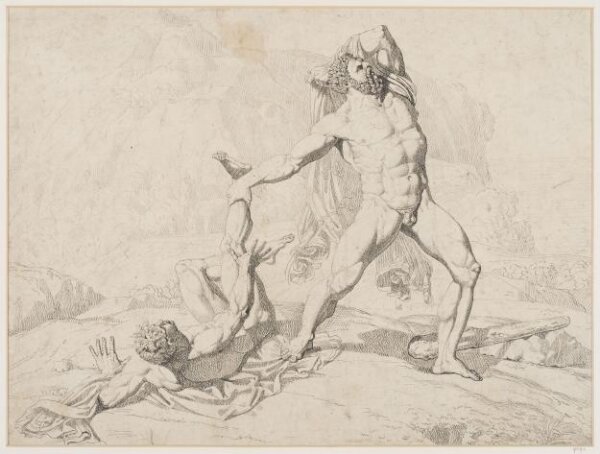
Saw the feet of Lichas
Sticking from a crevice.
He had crammed his head and body in there
With such desperate fear
He thought he was all hidden.
But Hercules’ pain had become madness.
He screamed ‘Lichas – you
Threw this net over me. You trapped me
In this instrument of torture.
You were great Juno’s catspaw
To strip my skeleton’.
And Lichas was jerking in the air
Like a rabbit
Dragged out by the hind legs.
He babbled excuses and scrabbled
For Hercules’ knees to embrace them –
Too late, Hercules’ arm
Was already whirling like a sling,
And like a slingshot Lichas
Shot into the sky, a dwindling speck
Out over the Euboean Sea.
As he went he hardened to stone.
As rain, they say, in the freezing winds
Hardens to snow, and the spinning snow
Is packed into hard hailstones.
Terror, we’re told, boiled off his body liquids,
Baking him to stone. So, petrified,
He began to fall.
A rock, he splashed
Into the sea, far out.
He is still there, a crag in the swell,
A man-shaped clinker of fear,
Feared by sailors, who shun it
As if it might be alive. They call it Lichas.
Now Hercules, most famous
Son of the high god,
Felled thick trees on the top of Oeta,
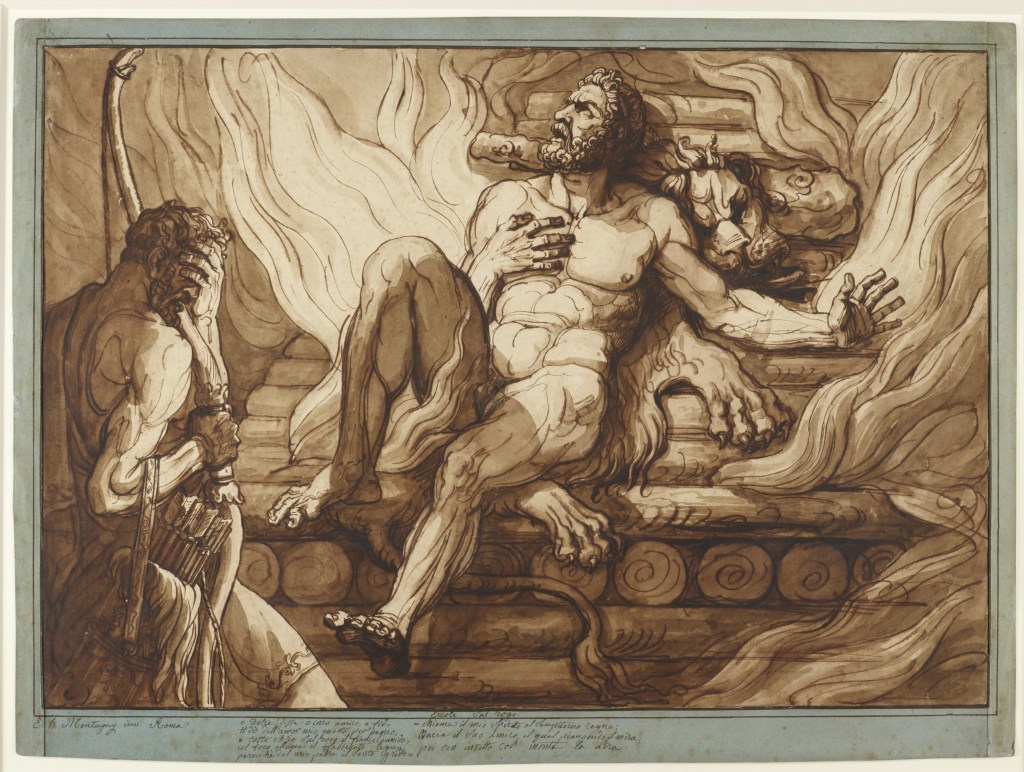
And built a pyre.
He summoned Philoctetes, son of Poeas
And gave him his bow, and quiver
And the arrows
Destined to return to the city of Troy.
With the help of Philoctetes
He kindled the square stack of tree trunks.
And draping over it
His robe – the skin of the Nemean lion –
He stretched himself full length on top of that,
Head pillowed on his club,
And as the flames took hold, and the smoke boiled up,
Gazed into space like a guest
Lolling among the wine cups,
Head wreathed with festive garlands.
Now flames savaged the whole pile
With elemental power
Like a pride of squabbling lions,
Worrying at limbs that ignored them,
Engulfing a hero who smiled in contempt.
The gods watched, distraught
To see the champion of the earth
Disintergrating in a blue shimmer,
Till Jupiter consoled them.
‘You are anxious for my son. That is good.
I am happy to rule
Over gods who feel gratitude
Towards one who helped them.
His exploits have earned your admiration.
Your admiration for him warms me too.
His honour is my honour.
But do not be perturbed by these flames
Where Oeta seems to erupt.
The fire can take pleasure in Hercules
Only through what he had from his mother.
What he had from me,
Is incombustible, indestructible,
Eternal –
Immune to flame, intangible to death.
That part has completed its earthspan.
So now – I shall lift it into heaven
Knowing that you will rejoice to welcome it.
‘If there is one among you
Who resents
This deification of my son
They will have to swallow all ill-feeling
And agree
Hercules has earned his reward’.
The gods approved. Even Juno
Heard her husband out with a calm gaze.
Only the slightest frown flicked her eyebrow
At the touch of that last sentence.
While Jupiter was speaking, the fire
Removed every trace of Hercules
That fire could get a grip on.
His mother’s boy had vanished.
In his place glowed the huge cast
Of the child of Jove.
The snake sloughs its age and dullness
In a turf of opaque tatters,
Emerging, a new-made, in molten brilliance –
So the Tirynthian hero emerged
More glorious, greater, like a descended god.
Then his omnipotent father hoisted him
Through clouds, in a four-horse chariot,
And fixed him among the constellations, massive.
Atlas grunted under the new weight.
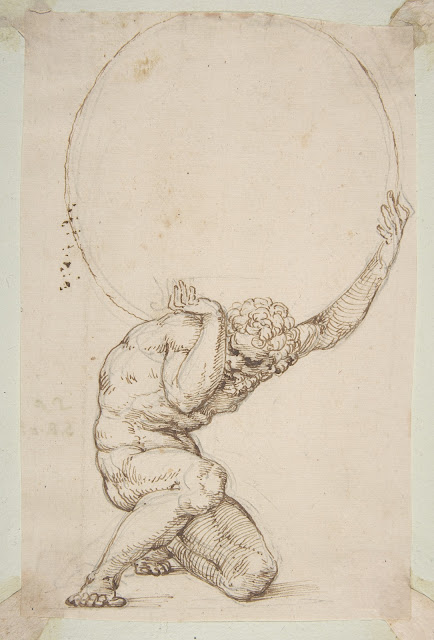
Hercules and Dejanira, copyright Ted Hughes, 1997


Leave a comment