
The Argo, by Constantine Volanakis, c. 1800
One of the oldest sources for the story of Jason and the Argonauts is the Argonautica, an epic poem in the same vein as Homer’s Iliad and the Odyssey, written by Apollonius of Rhodes. Apollonius was an inspiration to the Latin poets Virgil and Flaccus when they wrote their own epic poems, and he was both innovative and influential, providing Ptolemaic Egypt with a sense of national identity, as his other poems, which survive only in small fragments, concerned the beginnings or foundations of cities, such as Alexandria and Cnidus, which were places of interest to the Ptolemies, and he was for a time, both a scholar and librarian at the Library of Alexandria.
His poem tells the story of the young prince Jason and his quest for the Golden Fleece, and starts with Poseidon, one of the twelve Olympian gods in ancient Greek myth, presiding over the sea, storms, and earthquakes. When the god of the sea wished to mate with the extraordinarily beautiful Theophane, who had disguised herself as an ewe to avoid him, he changed himself into a ram to decieve her. Their offspring was a magical ram which bore a golden fleece, much sought after as it was seen as a symbol of authority and kingship.
Phrixus, the son of Nephele, in danger of his life being sacrificed to stop a famine, rode away through the sky with his sister, Helle, on the back of the ram. As the ram passed over the narrow strip of water that divided Europe from Asia, Helle lost her grip and fell into the water and drowned. Henceforth the waters were known as the Hellespont, the sea of Helle, in her memory.
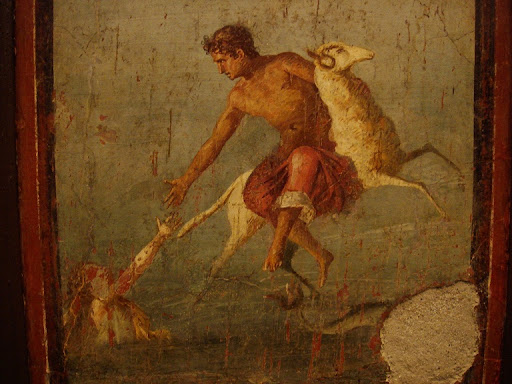
The ram eventually delivered Phrixus to supposed safety at Colchis, where King Aeetes gave him a home. In gratitude for this, Phrixus sacrificed the ram and gave the fleece to the king who hung it in the branches of a tree in a grove sacred to Ares, the Greek god of war and courage, where it was guarded by a fearsome snake that never slept. The king, because he had heard a fable that told of a man bearing a fleece would one day depose him of his throne, then killed Phrixus, but without knowing the oracle actually referred to somebody else.
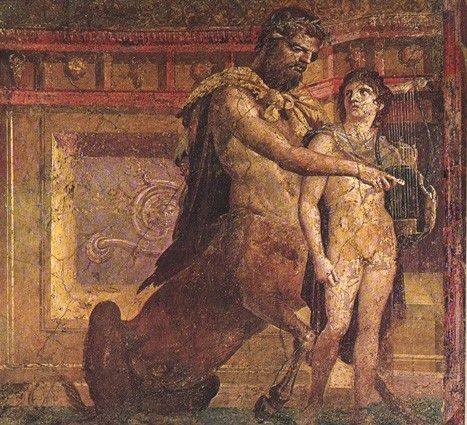
Years later in distant Greece, the young Jason, son of King Aeson who had been deposed by his evil brother Pelias, was spirited away for his own safety, to live with the centaur Cheiron. The centaur raised Jason and taught him how to fight and when he came of age, the prince returned to his homeland confronting Pelias, and demanded the throne be returned to his family as was his birthright. Pelias was terrified, but only agreed if Jason would bring him the legendary golden fleece. The prince agreed, and immediately set about his task.
Jason invoked the goddess Athena, and asked for a vessel worthy of such a journey, for Colchis was at the edge of the known world. Athena sent him Argus, a skilled shipbuilder, who was commissioned by Jason to construct a ship for his quest to retrieve the Golden Fleece. Argus built him the ship Argo, meaning swift and gave the prow the power of speech. This was achieved by a special piece of timber from the sacred grove of Zeus at Dodona being placed in the Argo’s prow. This timber was imbued with the power of prophecy.
Athena then put the thought of a great quest, danger and adventure into the minds of all Greek warriors, and soon Jason had a volunteer crew of fifty, among them Heracles, Castor and Pollux, Orpheus, and Telamon, with which to set sail, calling his crew the Argonauts.
The Argo first made land in Bithynia, where they consulted the blind sage Phineus, the greatest soothsayer in the world. Because the old man could read even the mind’s of the gods, Zeus flew into a rage and blinded the old man and set upon him the Snatchers, or Harpies, black-winged monsters with faces like evil hags, who stole and befouled his food, attacking him at every available opportunity.
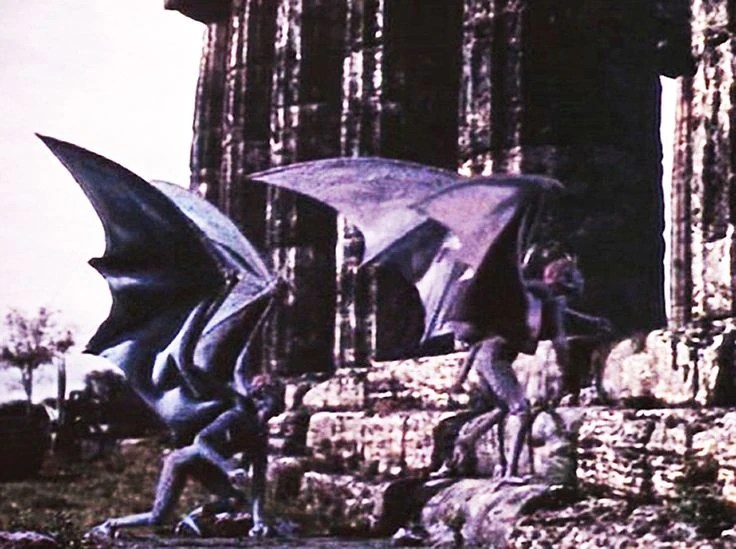
In return for advice on how to reach Colchis, Jason and his men drove away the Snatchers, killing many of them in the process, so Phineus could live in peace. One piece of advice Phineus gave Jason was how to survive passing through the Clashing Rocks at the entrance to the Black Sea, by first releasing a dove so they could time their passing. The Argo just about made it, she lost the tail end of her stern, but all on board survived.
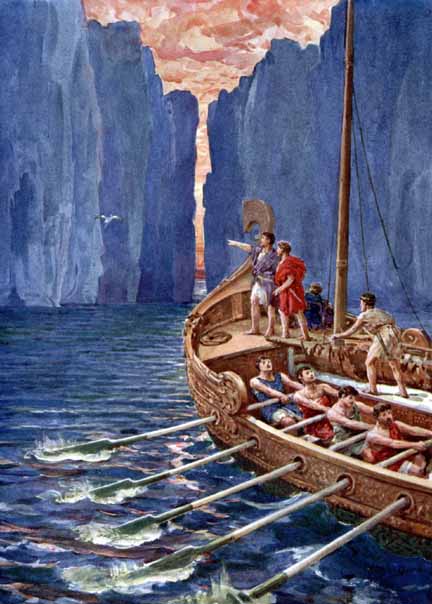
Just before they passed through the chasm, the sea monster Scylla that guarded the straits next to the whirlpool Charybdis, caught sight of the Argo attempting to traverse the gap and sought to destroy it. Jason though was being aided by Hera and Athena in his quest for the Golden Fleece, and they helped the Argo sail safely between the two dangers.
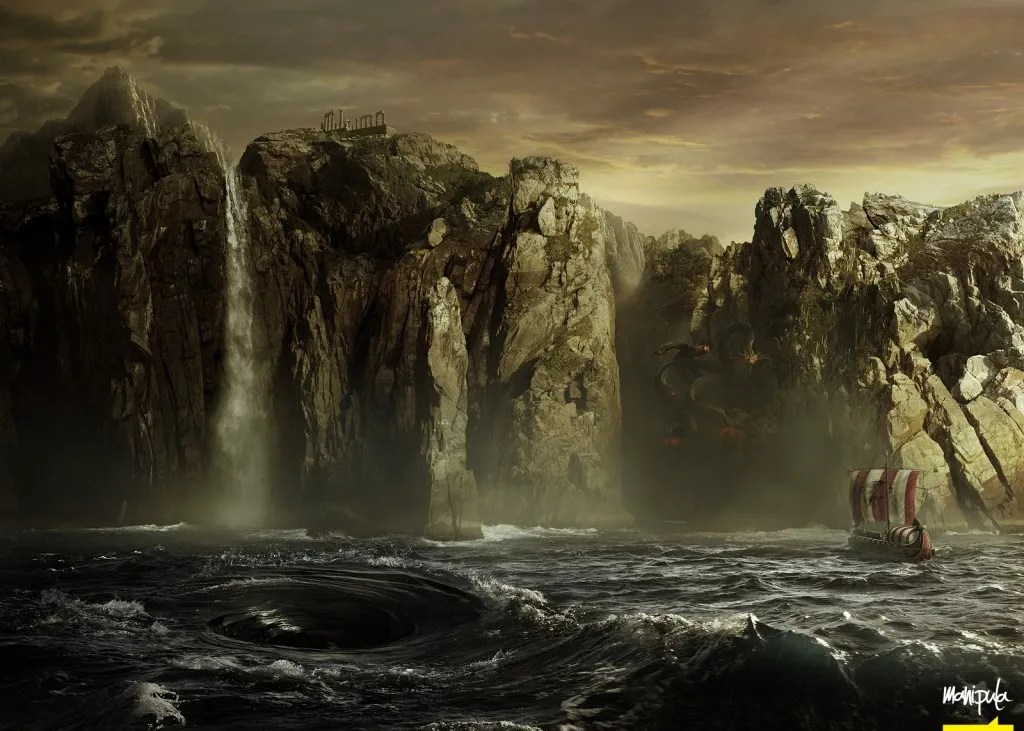
Eventually they made landfall at Colchis where King Aeetes made them welcome, but recalling Phrixus’ murder, he secretly recognised in Jason the man foretold by the oracle who was to dethrone him. So he gave Jason two tasks to complete before he could take the fleece given to him years before by Phrixus, thinking the young prince would never survive them.
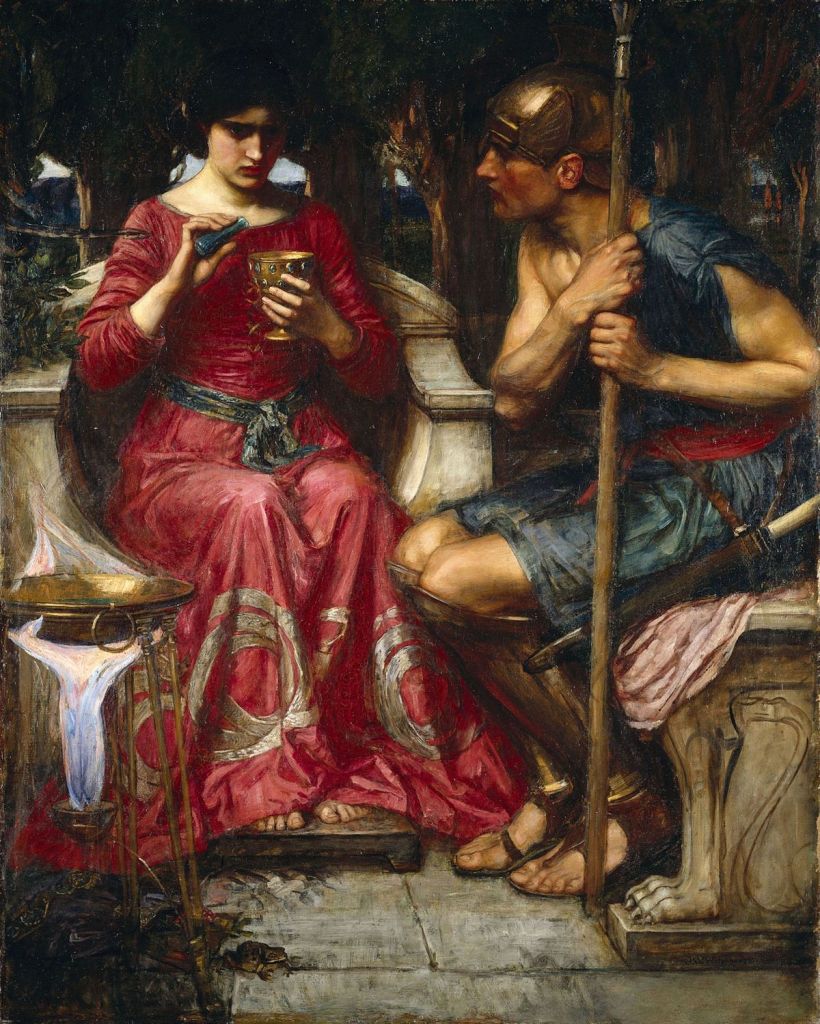
Aeetes daughter Medea, a young woman well-versed in magic, had fallen in love with Jason, Apollonius recounts;
He (Eros) crouched down small at the feet of Jason himself, placed the arrow’s notches in the centre of the bowstring…and shot at Medea; and speechless amazement seized her heart. He darted back out of the high-roofed hall, laughing out loud, and the arrow burned deep down in the girl’s heart like a flame. She continually cast bright glances straight at Jason…and…thoughts fluttered from her breast…her tender cheeks turned now pale, now red, in the distraction of her mind’.
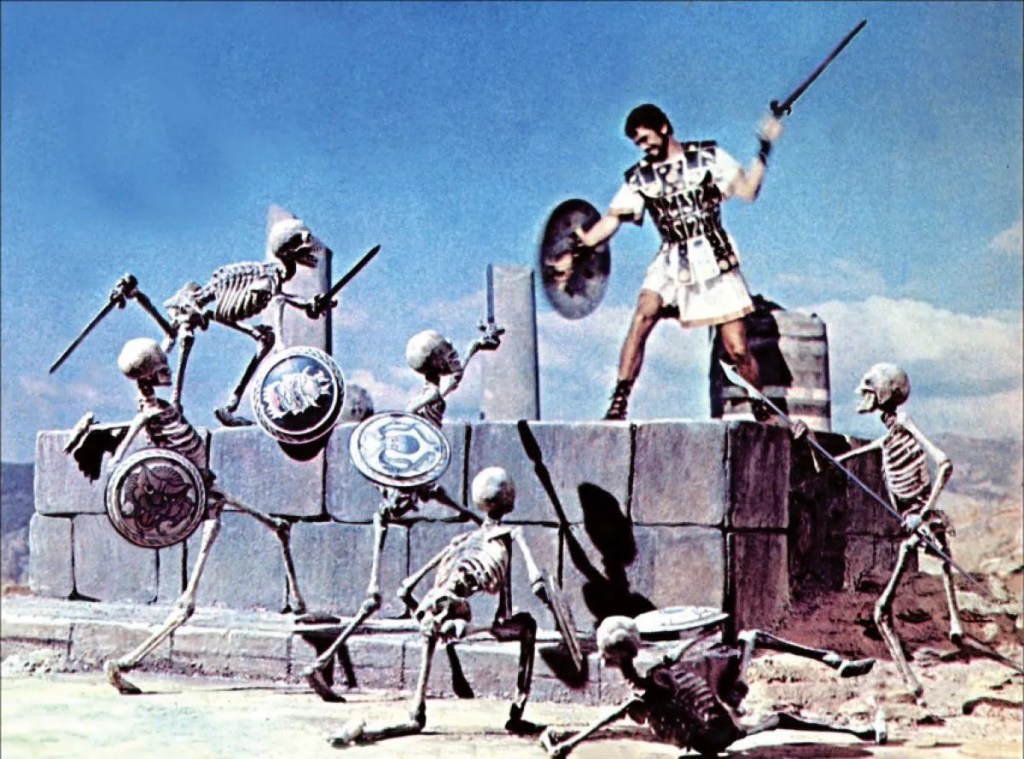
Medea knew the danger Jason faced, and so gave him a salve, a fire-resistant ointment for his skin, to protect him during his first task. He had to sow a field with dragons teeth, but the field had to be ploughed by aggressive, fire-breathing oxen with lethal bronze hoofs. Medea had realised her father’s duplicity and warned Jason that these “teeth” were actually skeletal warriors, that, once sown, would come to life and seek to kill him.
As the skeletons attacked Jason and his men in a terrible fight, Jason threw a rock into the mass of the undead and the skeleton warriors began battling each other in the confusion, unable as they were to detect who had thrown the stone, and ended up slaughtering each other, leaving the Argonauts to escape unharmed.
Aeetes still plotted against Jason and he was planning to kill them whilst they slept. Medea found out and warned Jason, and before the king could implement his plan, Jason acted by going to the grove of Ares, where Medea used magic to put the Colchis dragon, the serpent who guarded the grove, to sleep, leaving Jason free to remove the Golden Fleece from the branches of the tree, and flee back to the his men and the ship. Medea decided to elope with Jason, and she took her brother Absyrtus with her. When her father set out after them, and he nearly overtook them, she murdered her brother, and cutting his body into pieces she strew them over the roadside, so that her father would be delayed by gathering up his child’s remains for burial.
The journey back to Iolkos was not without its dangers but eventually the Argo was once again anchored in the harbour at the city of Pelias; and Jason present the Golden Fleece to his uncle. Pelias, even with the Golden Fleece now in his possession had no desire to make good on his promise, and forbade Jason and his men to stay in the kingdom, but for his treachery Pelias was killed by his own daughters.
Jason and Medea sailed away but their lives did not end happily. Arriving back home to Iolkos, the local people were uncomfortable with Medea’s magic, and about the fact she had murdered her own brother to help her escape, and drove her and Jason out of the town. They fled into exile, eventually arriving at the city of Corinth where the king offered Jason his daughter Glauce, in marriage. Jason agreed and so broke the vow he had made to the gods to be true to Medea. Furious, Medea killed Glauce, and her and Jason’s two sons and then ascended to Mount Olympus where she eventually married the warrior Achilles. Her story is the subject of her own Greek tragedy, the earliest reading of it coming from Hesiod in his Theogony, around 700 BC, and later on a play by Euripides in 431 BC, which is still performed today.
A distraught and shattered Jason returned to Iolkos where his boat the Argo has been put on display. The once-great hero was a shadow of his former self, living a life of isolation. One lonely day, while he was sitting beneath the boat weeping, a decaying beam from his ship snapped under its own weight, and falling on his head it killed him instantly.
While Jason did not possess supernatural powers, his heroism was marked by his leadership, bravery, and grit. He was a natural leader who inspired and united his men, the Argonauts. His determination shone through in the face of almost overwhelming odds, and he kept him focused on his quest to find the Golden Fleece.

 everythinglatin.co.uk
Leave a comment