Reported by Katy Prickett
BBC News, Norfolk
- Published on 1st March 2025
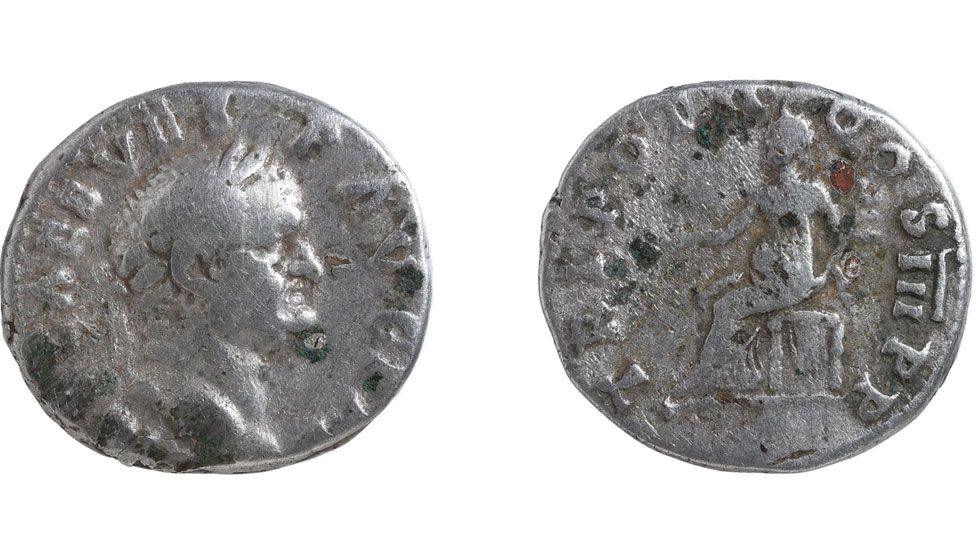
A hoard of 16 silver Roman coins spanning two centuries has been discovered in a field by a metal detectorist.
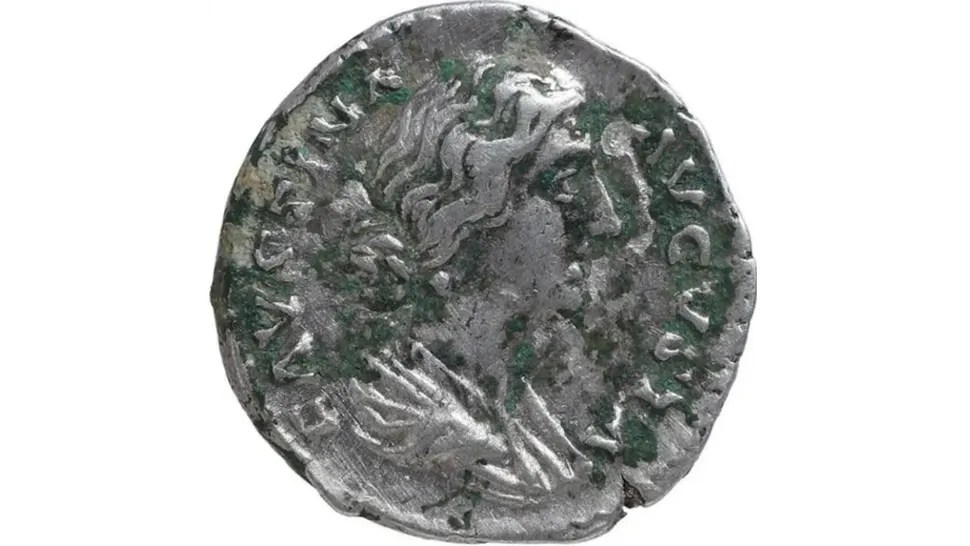
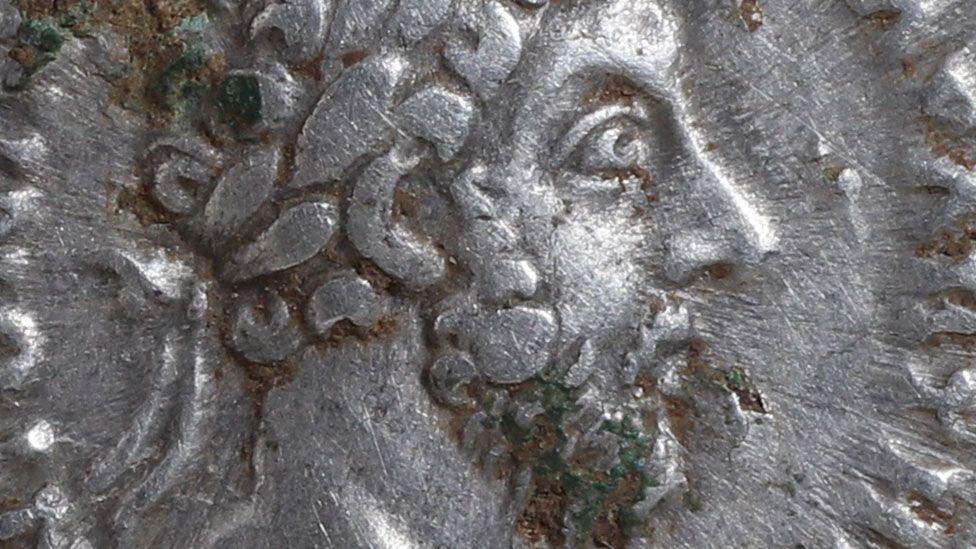
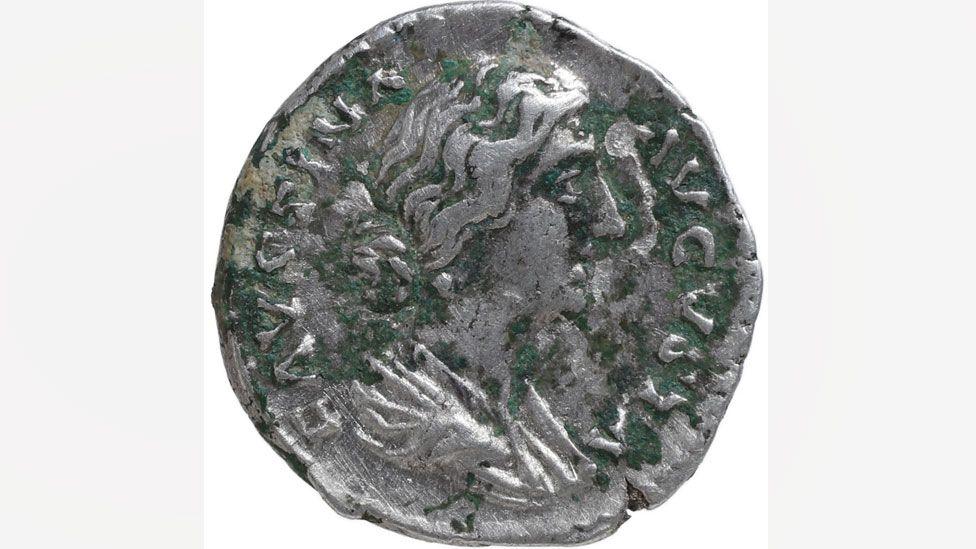
The denarii date from the late Roman Republic to the reign of Marcus Aurelius and his wife Faustina, and were found at Barton Bendish, Norfolk.
Coin specialist Adrian Marsden said the loss might have been the equivalent of “a few hundred quid” to its owner.
The hoard is the subject of a treasure inquest and King’s Lynn Museum is hoping to acquire it.
“There’s 200 years’ worth of coins in the hoard, which is what you get with a stable currency,” Dr Marsden, from the Norfolk Historic Environment Service, said.
“It’s similar to the 1960s when you’d still get Victorian pennies in your change, although they were practically worn smooth.”
The earliest coin in the hoard dates from 57BC and is also the most worn.
It was made in the Roman Republic which lasted from 509BC, when a monarch was replaced by elected magistrates, until AD27, when the empire began.
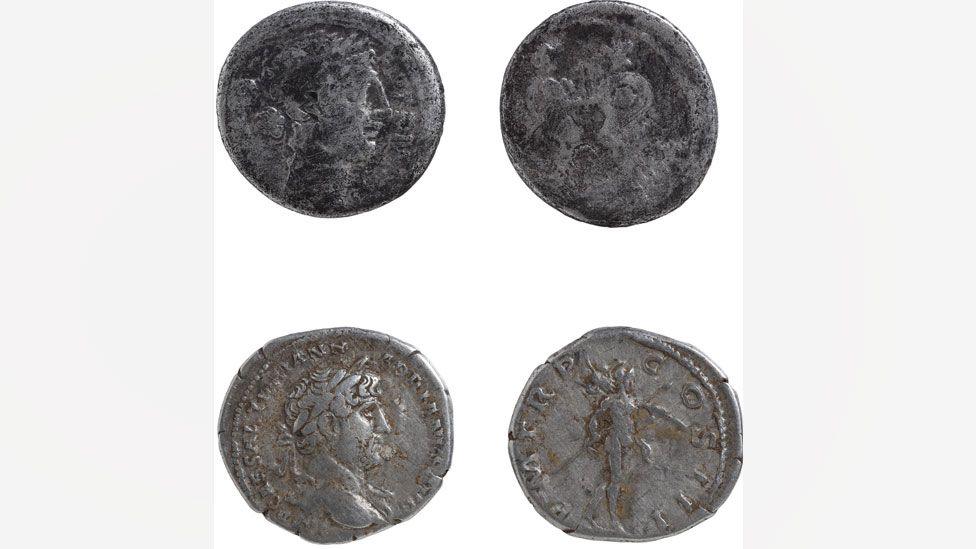
The rest of the coins show six emperors and two of their wives, with the most recent denarii dating to AD175-6.
Dr Marsden said it was impossible to know if the coins were a purse loss or had been deliberately hidden “which is simply what you do when you haven’t got banks”.
“We do know that this part of Norfolk, the area on the fen edge around King’s Lynn, was a very prosperous part of Britain – there was a line of villas here and you’ve got [the county’s longest Roman road] the Peddars Way, because the soil is very fertile and it’s prime agricultural land,” he said.
“While it’s always very difficult to tie in coins with prices today, because the structure of society was so very different, the loss was probably worth the equivalent of a few hundred quid to its owner.”
Roman Norfolk
Norfolk was an important part of Roman Britain, with many large villas that acted as the hubs of farming estates, Marsden said. One of Britain’s longest Roman roads passed through the region; and the west of Norfolk, in particular, was considered prime land for farming because the soil there was fertile.
The Roman coin hoard may have been buried at the time for safekeeping, which was a common practice in an era when there were no banks. It’s also possible that a person lost a purse that held the coins: “This would work for something this size,” Marsden said.
Two of the newfound silver coins portray the wives of the Roman emperors, including Faustina I, the wife of Antoninus Pius, and Faustina II, the wife of Marcus Aurelius.
 everythinglatin.co.uk
Leave a comment